
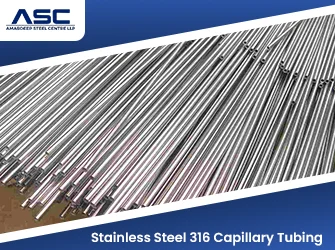
Stainless Steel Capillary Tubes Manufacturer & Exporter
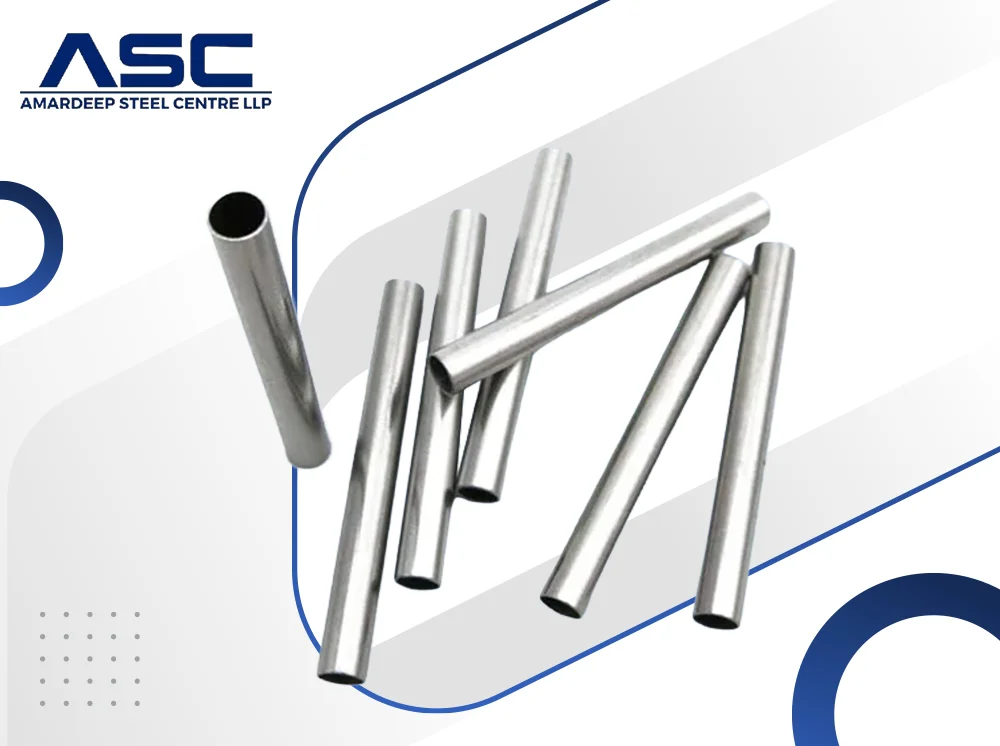
Stainless steel capillary tubes are precision-engineered products used to enable controlled fluid or gas flow through an extremely narrow bore, making them well suited to measurement, sensing, and flow-restriction applications across instrumentation systems.Amardeep Steel Centre operates as a reliable manufacturer and exporter in Mumbai, supplying stainless steel capillary tubes in outer diameters from 0.3 mm to 10 mm, produced from rigid, corrosion-resistant material that supports consistent capillary action whether the line is routed vertically or horizontally within the system. Our range includes SS 304 seamless capillary tubes for general-purpose applications, SS 316 capillary tubes for higher corrosion resistance, and cost-effective SS 316 welded capillary tubes, with seamless variants cold-drawn through precision reduction passes for greater
strength and dimensional consistency. All our stainless steel capillary tubes are manufactured to comply with ASTM A213 and ASTM A269 standards, with wall thickness held to tight tolerances across standard gauge sizes from 7 to 22, matched to your application's pressure and flow requirements. Check the specifications below or get in touch for a quote
Technical Data
Stainless Steel Capillary Tubes Specification
| Specification | Detail |
|---|---|
|
Standard |
ASTM A213, ASTM A269, ASTM A312 |
|
Grades stocked |
SS 304, SS 304L, SS 316, SS 316L |
|
Outer diameter |
0.3 mm to 10 mm across the range |
|
Wall thickness |
0.08 mm to 1.5 mm |
|
Construction |
Seamless or welded, depending on grade and size |
|
Length |
Cut length or continuous coil |
|
End finish |
Plain end or bevelled end |
|
Surface finish |
Bright annealed, pickled, polished or electropolished |
|
Certification |
EN 10204 3.1 Mill Test Certificate standard, 3.2 on request |
Material Selection Guide for Stainless Steel Capillary Tubes
| Alloy Grade | Key Performance Characteristics | Common Industrial Uses |
|---|---|---|
|
SS 304 / 304L |
Good strength, easy bending, and practical rust protection without inflating costs. View our Stainless Steel 304L Pipes & Tubes. |
General industrial instrumentation, sensing bulbs, automotive lines. |
|
SS 316 / 316L |
Alloyed with molybdenum to stop pitting, crevice corrosion, and chloride attack. View our Stainless Steel 316 Pipes & Tubes. |
Chemical processing skids, offshore setups, medical gear. |
|
Specialty Alloys |
Custom runs in Grade 321, 347, 310S, and Duplex steel for heavy heat or vibration. |
High-temp furnaces, aerospace impulse lines, power plants. |
Chemical Composition of Stainless Steel Capillary Tubes
| Element | 304 (UNS S30400) | 304L (UNS S30403) | 316 (UNS S31600) | 316L (UNS S31603) |
|---|---|---|---|---|
|
Carbon, max |
0.08 |
0.035 |
0.08 |
0.035 |
|
Manganese, max |
2.00 |
2.00 |
2.00 |
2.00 |
|
Phosphorus, max |
0.045 |
0.045 |
0.045 |
0.045 |
|
Sulphur, max |
0.030 |
0.030 |
0.030 |
0.030 |
|
Silicon, max |
1.00 |
1.00 |
1.00 |
1.00 |
|
Chromium |
18.0 to 20.0 |
18.0 to 20.0 |
16.0 to 18.0 |
16.0 to 18.0 |
|
Nickel |
8.0 to 11.0 |
8.0 to 12.0 |
10.0 to 14.0 |
10.0 to 14.0 |
|
Molybdenum |
Not applicable |
Not applicable |
2.0 to 3.0 |
2.0 to 3.0 |
Mechanical Properties of Stainless Steel Capillary Tubes
| Property | 304 / 304L | 316 / 316L |
|---|---|---|
|
Tensile strength, minimum |
515 MPa (75000 psi) |
515 MPa (75000 psi) |
|
Yield strength, 0.2 percent proof, minimum |
205 MPa (30000 psi) |
205 MPa (30000 psi) |
|
Elongation in 50 mm, minimum |
35 percent |
35 percent |
|
Hardness, maximum |
92 HRB |
95 HRB |
|
Solution annealing temperature |
Approximately 1040 C |
Approximately 1040 C |
Equivalent Grades for Stainless Steel Capillary Tubes
| Grade | UNS | Werkstoff | EN name | JIS |
|---|---|---|---|---|
|
SS 304 |
S30400 |
1.4301 |
X5CrNi18 10 |
SUS 304 |
|
SS 316 |
S31600 |
1.4401 |
X5CrNiMo17 12 2 |
SUS 316 |
Stainless Steel Capillary Tube Schedule Chart
| NB Sizes | SCH 5 | SCH 10 | SCH 40 | SCH 80 | SCH 160 |
|---|---|---|---|---|---|
|
1/8" |
✓ |
✓ |
✓ |
✓ |
|
|
1/4" |
✓ |
✓ |
✓ |
✓ |
|
|
3/8" |
✓ |
✓ |
✓ |
✓ |
|
|
1/2" |
✓ |
✓ |
✓ |
✓ |
✓ |
|
3/4" |
✓ |
✓ |
✓ |
✓ |
✓ |
|
1" |
✓ |
✓ |
✓ |
✓ |
✓ |
|
1 1/4" |
✓ |
✓ |
✓ |
✓ |
✓ |
|
1 1/2" |
✓ |
✓ |
✓ |
✓ |
✓ |
|
2" |
✓ |
✓ |
✓ |
✓ |
✓ |
|
2 1/2" |
✓ |
✓ |
✓ |
✓ |
✓ |
|
3" |
✓ |
✓ |
✓ |
✓ |
✓ |
|
4" |
✓ |
✓ |
✓ |
✓ |
✓ |
|
5" |
✓ |
✓ |
✓ |
✓ |
|
|
6" |
✓ |
✓ |
✓ |
✓ |
STAINLESS STEEL CAPILLARY TUBE DIMENSIONAL TOLERANCES
| SIZE OD | NOMINAL WALL THICKNESS | OUTSIDE DIAMETER TOLERANCE | LENGTH TOLERANCE | WALL THICKNESS TOLERANCE | ||||
|---|---|---|---|---|---|---|---|---|
| (in) | (mm) | (in) | (mm) | (in) | (mm) | (in) | (mm) | (%) |
½ | 12.7 | 0.065 | 1.65 | +/-0.005 | +/-0.13 | +⅛, -0 | +3.18, -0 | +/-10.0% |
¾ | 19.1 | 0.065 | 1.65 | +/-0.005 | +/-0.13 | +⅛, -0 | +3.18, -0 | +/-10.0% |
1 | 25.4 | 0.065 | 1.65 | +/-0.005 | +/-0.13 | +⅛, -0 | +3.18, -0 | +/-10.0% |
1½ | 38.1 | 0.065 | 1.65 | +/-0.008 | +/-0.20 | +⅛, -0 | +3.18, -0 | +/-10.0% |
2 | 50.8 | 0.065 | 1.65 | +/-0.008 | +/-0.20 | +⅛, -0 | +3.18, -0 | +/-10.0% |
2½ | 63.5 | 0.065 | 1.65 | +/-0.010 | +/-0.25 | +⅛, -0 | +3.18, -0 | +/-10.0% |
3 | 76.2 | 0.065 | 1.65 | +/-0.010 | +/-0.25 | +⅛, -0 | +3.18, -0 | +/-10.0% |
4 | 101.6 | 0.083 | 2.11 | +/-0.015 | +/-0.38 | +⅛, -0 | +3.18, -0 | +/-10.0% |
6 | 152.4 | 0.109 | 2.77 | +/-0.030 | +/-0.76 | +1, -0 | +25.4, -0 | +/-10.0% |
Different Types of Stainless Steel 304 Seamless Capillary Tubes
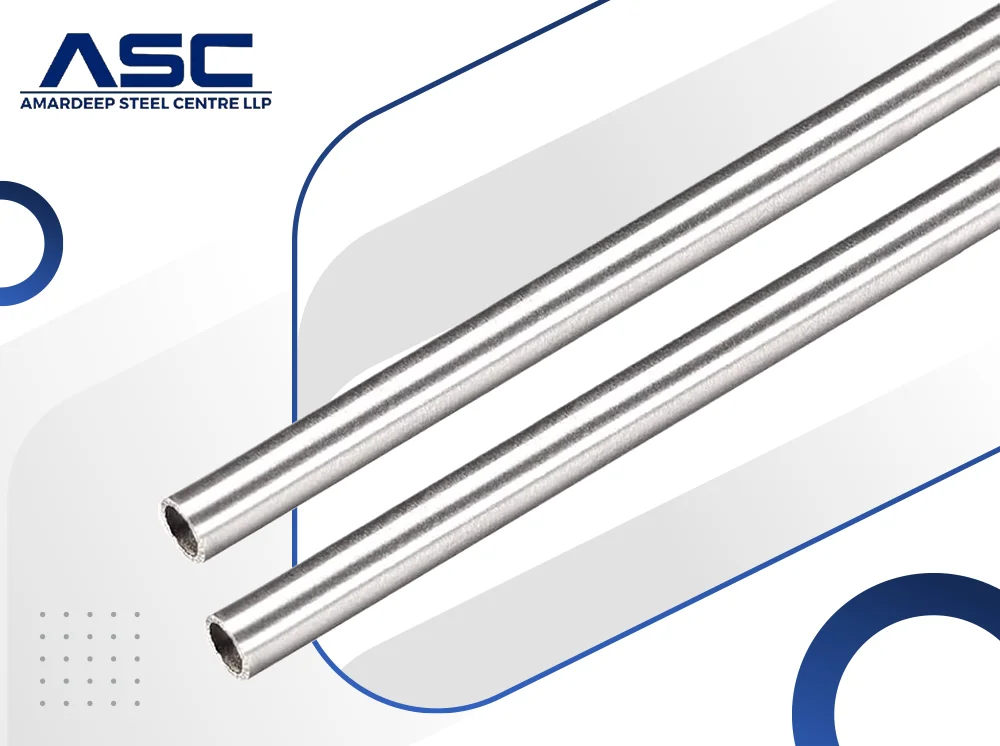
Stainless Steel Seamless Capillary Tube
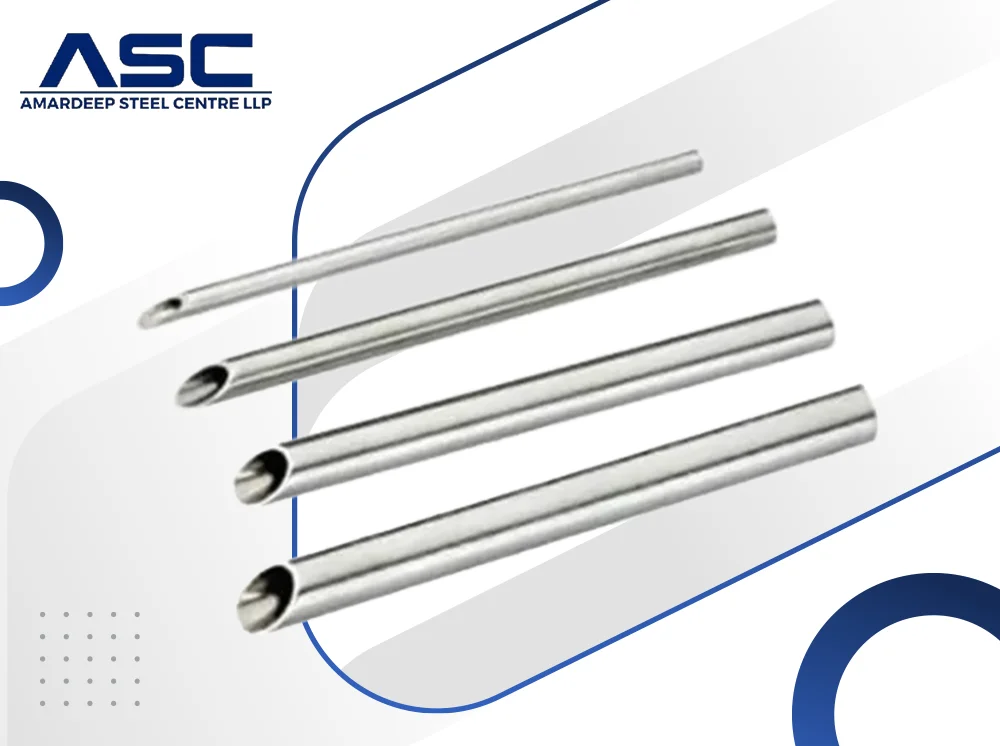
Stainless Steel Needle
Tubing
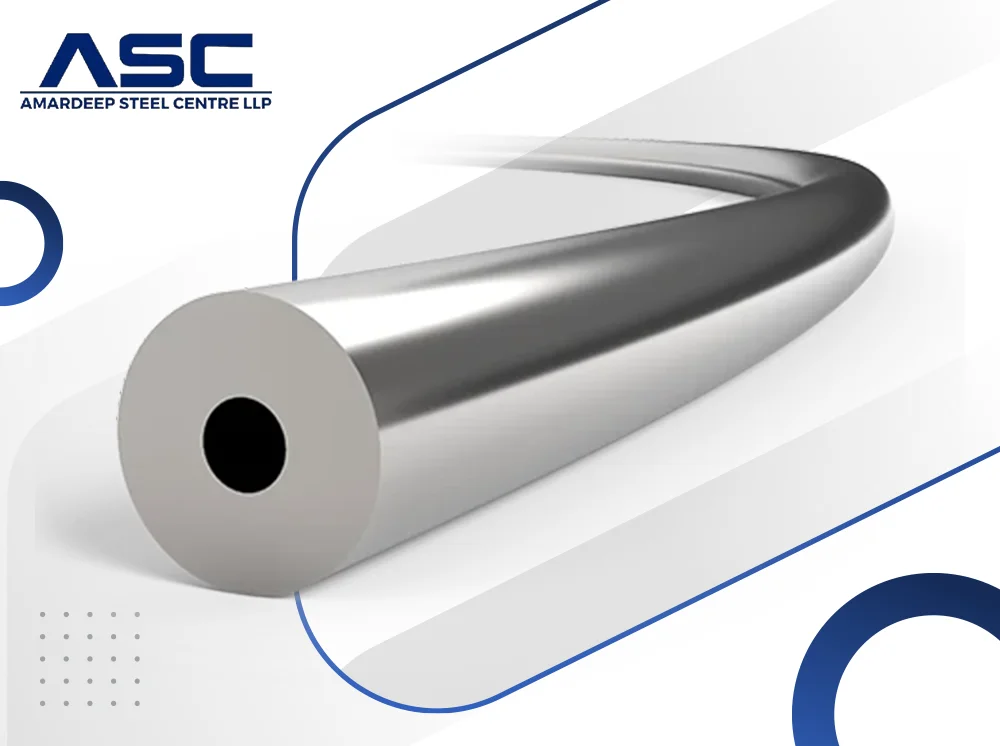
Stainless Steel HPLC
Tubing

Stainless Steel 1_16 in. Capillary Tubing
SS Micro
Tubing
SS Evaporator Coil Capillary
Tube
Applications of Stainless Steel Capillary Tubes
Stainless steel capillary tubes are used across industries where precise, low-volume flow control and corrosion resistance are critical:
- Instrumentation & Process Control: Pressure sensing lines, impulse tubing for transmitters, gauges, and switches
- Oil, Gas & Petrochemical: Sampling lines, chemical injection systems, and analyzer tubing in process plants
- Refrigeration & HVAC: Flow restrictors in refrigerant circuits, expansion valves, and evaporator coils
- Pharmaceutical & Analytical Equipment: HPLC and chromatography systems, laboratory testing instruments
- Medical Devices: Fluid delivery lines, sensor sheathing, and precision medical instrumentation
- Automotive: Fuel injection lines, hydraulic control tubing, and sensor housings
- Aerospace & Defense: Hydraulic control lines, pressure sensing, and thruster/resist jet applications
- Power Generation: Thermocouple sheathing and instrumentation tubing in boilers and turbines
- Marine & Offshore: Corrosion-resistant instrumentation lines in chloride-exposed environments
Frequently Asked Questions
What is a stainless steel capillary tube?
Stainless steel capillary tube is a specially made tube with a small outer dimension, typically in the range of 10mm in diameter. This tube is manufactured to precision to meet the outer diameter, inner diameter and wall thickness standards and is used in applications with limited flow since the flow is smaller than usual fluid transportation.
What is the difference between 304 and 316 stainless steel capillary tube?
316 stainless steel capillary tube contains between 2% and 3% of molybdenum, which is absent in the case of 304 steel. This leads to 316 becoming stronger than 304 when it comes to pitting corrosion and crevice corrosion in media carrying Chloride such as sea water, coastal air or strong chemicals for cleaning purposes. 304 is more affordable and is proven to work well in applications where chlorides should not be present.
Is stainless steel capillary tube always seamless?
No, seamless and welded stainless steel capillary tubes exist in the industry. While seamless tubes are more suitable for various processes, welded tube business is cheaper and still reliable for general signal and instrumentation applications.
What sizes are available in stainless steel capillary tube?
Across our stocked range, outer diameters run from about 0.3 mm up to 10 mm, with wall thicknesses from about 0.08 mm to 1.5 mm. The exact range available depends on grade and construction; see the grade-specific pages for full dimension charts.
Which industries use stainless steel capillary tubes?
Instrumentation and pressure sensing, HPLC and laboratory analytical equipment, medical devices, refrigeration and HVAC expansion, aerospace and defence, and marine and offshore instrumentation are the most common users, with grade 316 favoured wherever chloride resistance matters.
