Inconel Forged Fittings Manufacturer, Supplier & Exporter in India
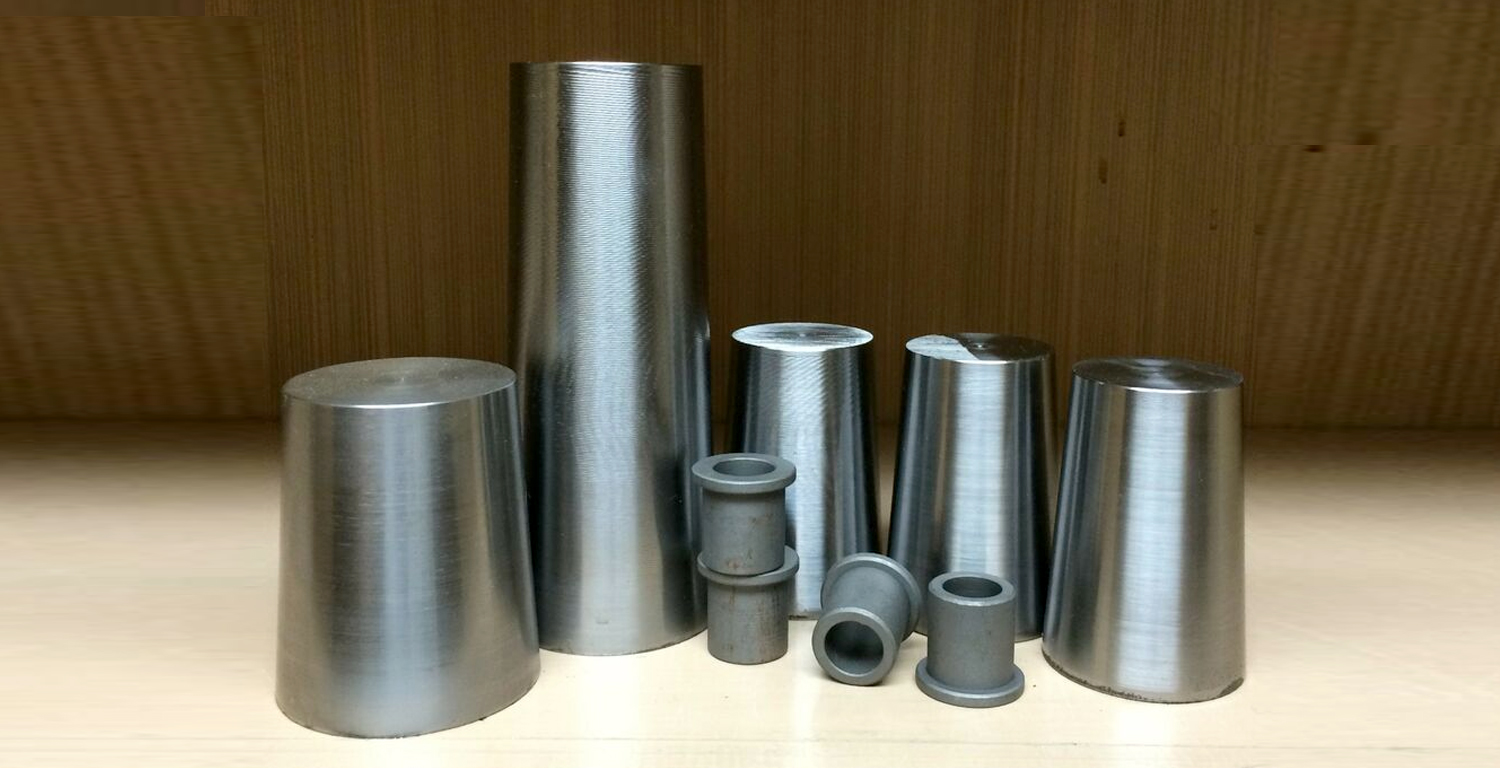
Amardeep Steel manufactures and supplies Inconel Forged Fittings to ASME B16.11 in grades Inconel 600, 601, 617, 625, 718, and X-750 - nickel-chromium superalloys engineered for extreme heat, pressure, and corrosion resistance. These fittings are aerospace, power generation, petrochemical, marine, and oil and gas fittings available in socket weld and threaded types in classes 2000 to 9000 LBS and sizes 1/8" to 4" NB.
All fittings are supplied with EN 10204 3.1 Mill Test Certificates. Third-party inspection by SGS, Bureau Veritas, and Lloyd’s Register is available on request. Export shipments to UAE, Saudi Arabia, USA, UK, Singapore, South Africa, and Australia.
Table of Contents
- Inconel Forged Fittings Manufacturer
- Specifications
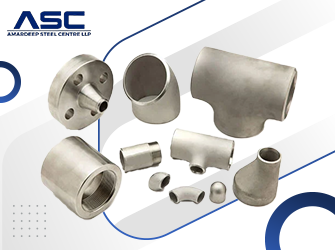
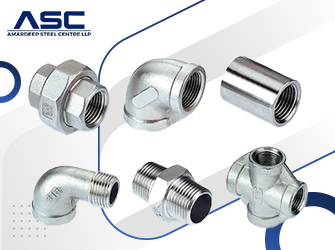
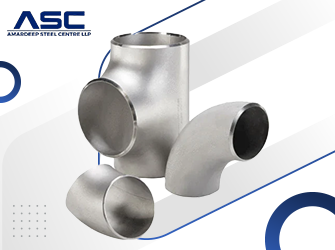
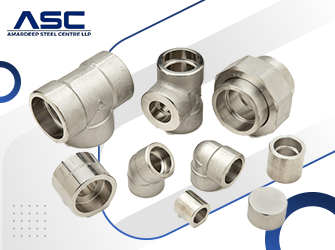
- Types of Inconel Forged Fittings
- Available Grades
- Socket Weld Size Chart
- Weight Chart
- Tolerance Chart
- Chemical Composition
- Mechanical Properties
- Physical Properties
- Equivalent Standards
- Heat Treatment
- Advantages
- Applications
- Forged vs Cast Comparison
- Testing & Quality
- Packaging
- Related Products
- FAQs
Inconel Forged Fittings Specifications
| Category | Details |
|---|---|
| Standards | ASME B16.11, MSS SP-79, MSS SP-83, MSS SP-95, MSS SP-97, BS 3799 |
| Grades | Inconel 600 (UNS N06600), 601 (N06601), 617 (N06617), 625 (N06625), 718 (N07718), X-750 (N07750) |
| Size Range | 1/8" to 4" NB | Outlet: 1/2" to 14" |
| Pressure Classes | Class 2000, 3000, 6000, 9000 LBS |
| Connection Types | Socket Weld, Threaded (NPT, BSPT, BSP, NPTF) |
| Fitting Types | Elbow, Tee, Cross, Cap, Coupling, Union, Reducer, Plug, Olets (Weldolet, Sockolet, Threadolet) |
| Forging Method | Cold/Hot Forging, Open/Closed Die, Impression Die, Upset Forging, Drop Forging |
| Finish | Proof Machined, Forged Black |
| Schedule | Class 3000: SCH 80 / XS | Class 6000: SCH 160 | Class 9000: SCH XXS |
| Value Added Services | Age Hardening, Heat Treatment, Q & T, Annealing, Normalizing |
| Manufacturing Method | Forging, CNC Machining, Heat Treatment, Sawing |
| MTC | EN 10204 3.1 Mill Test Certificates available for all orders |
Looking for Inconel Forged Fittings in a specific grade or pressure class? Contact Amardeep Steel for a Quote
Types of Inconel Forged Fittings
.png)
Inconel Olets (Weldolet, Sockolet, Threadolet)
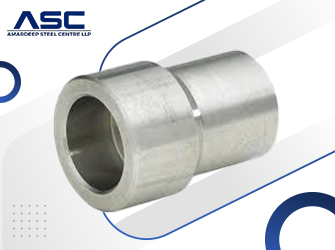
Inconel Socket Weld Inserts
.png)
Inconel Threaded Elbow (45° & 90°)
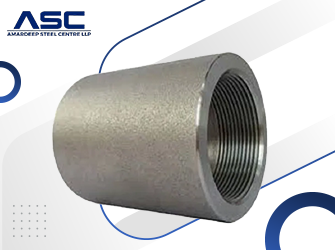
Nickel Alloy 725 Coupling
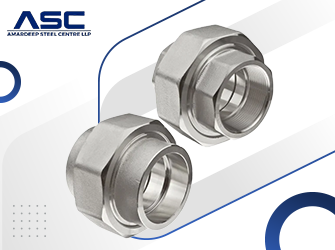
Inconel Forged Union
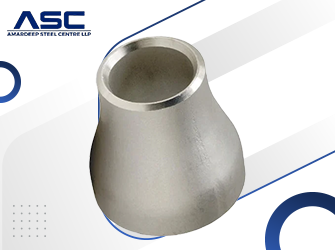
UNS N07725 Forged Reducer
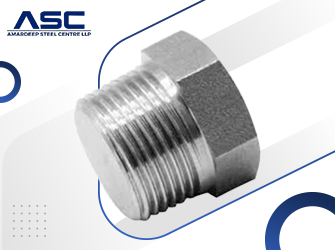
Inconel Forged Plug
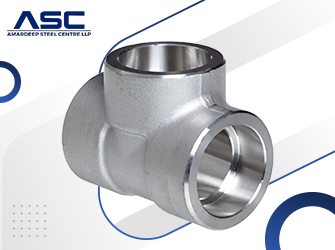
Inconel Socket Weld Tee
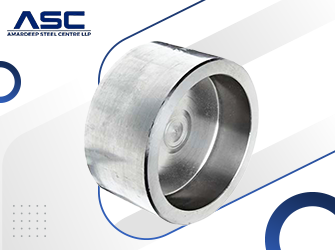
Inconel Socket Weld Cap
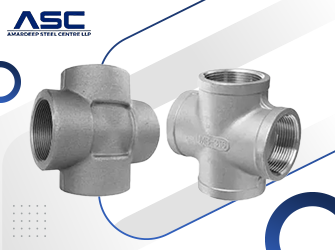
Inconel Threaded Cross
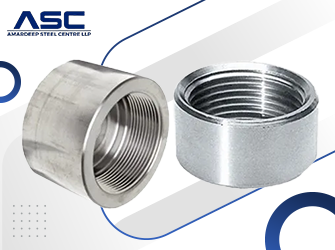
Inconel Half & Full Coupling
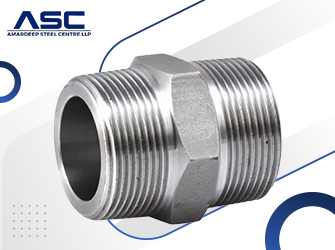
Inconel Hex Nipple / Pipe Nipple
Inconel Forged Fittings Grades
Inconel 600 Forged Fittings
UNS N06600 — the original nickel-chromium alloy. Excellent resistance to high-temperature oxidation and reducing environments. Specified for furnace components, heat exchangers, and chemical processing lines up to 1093°C.
Inconel 625 Forged Fittings
UNS N06625 — the most widely specified grade for marine, offshore, and chemical service. Outstanding pitting and crevice corrosion resistance conferred by the Nb + Mo matrix. NACE MR0175 compliant for sour service.
Inconel 690 Forged Fittings
UNS N06690 — a high-chromium nickel alloy engineered for superior resistance to oxidation and stress corrosion cracking in high-temperature and high-purity water environments. Widely used in nuclear power plants (steam generator tubing), heat exchangers, and nitric acid processing.
Inconel 718 Forged Fittings
UNS N07718 — the workhorse precipitation-hardened grade for aerospace and downhole applications. Highest strength of the Inconel family in the aged condition. Service temperature to 700°C under cyclic stress.
Inconel X-750 Forged Fittings
UNS N07750 — age-hardenable grade with high relaxation resistance. Used in gas turbine springs, fasteners, and high-temperature pressure vessel closures. Two-stage heat treatment per AMS 5542 achieves tensile strengths exceeding 1000 MPa.
Inconel Socket Weld Pipe Fittings Size Chart
| NPS | Thread Size (NPT) | OD (inches) | Wall Thickness (inches) | Length (inches) |
|---|---|---|---|---|
| 1/4 | 1/4 NPT | 0.540 | 0.095 | 2.5 |
| 1/2 | 1/2 NPT | 0.840 | 0.105 | 3.0 |
| 3/4 | 3/4 NPT | 1.050 | 0.120 | 3.5 |
| 1 | 1 NPT | 1.315 | 0.140 | 4.0 |
| 1-1/4 | 1-1/4 NPT | 1.660 | 0.140 | 5.0 |
| 1-1/2 | 1-1/2 NPT | 1.900 | 0.145 | 5.5 |
| 2 | 2 NPT | 2.375 | 0.154 | 6.0 |
| 2-1/2 | 2-1/2 NPT | 2.875 | 0.203 | 7.0 |
| 3 | 3 NPT | 3.500 | 0.216 | 8.0 |
| 4 | 4 NPT | 4.500 | 0.237 | 9.0 |
Inconel Socket Weld Fittings Weight Chart
| NPS | Fitting Type | Weight (lbs) | Weight (kg) |
|---|---|---|---|
| 1/4 | Socket Weld | 0.18 | 0.08 |
| 1/4 | Threaded | 0.25 | 0.11 |
| 1/2 | Socket Weld | 0.32 | 0.14 |
| 1/2 | Threaded | 0.45 | 0.20 |
| 3/4 | Socket Weld | 0.52 | 0.24 |
| 3/4 | Threaded | 0.65 | 0.29 |
| 1 | Socket Weld | 0.74 | 0.34 |
| 1 | Threaded | 1.02 | 0.46 |
| 1-1/4 | Socket Weld | 1.06 | 0.48 |
| 1-1/4 | Threaded | 1.38 | 0.63 |
| 1-1/2 | Socket Weld | 1.52 | 0.69 |
| 1-1/2 | Threaded | 1.94 | 0.88 |
| 2 | Socket Weld | 2.15 | 0.98 |
| 2 | Threaded | 2.85 | 1.29 |
| 2-1/2 | Socket Weld | 3.00 | 1.36 |
| 2-1/2 | Threaded | 4.35 | 1.97 |
| 3 | Socket Weld | 3.58 | 1.62 |
| 3 | Threaded | 5.10 | 2.31 |
Inconel Socket Weld Pipe Fittings Tolerance Chart
| NPS | Pipe SCH | OD Tolerance (inches) | Wall Thickness Tolerance (inches) | Length Tolerance (inches) |
|---|---|---|---|---|
| 1/4 | SCH 40 | ±0.015 | ±0.010 | ±0.125 |
| 1/4 | SCH 80 | ±0.020 | ±0.012 | ±0.125 |
| 1/2 | SCH 40 | ±0.020 | ±0.012 | ±0.125 |
| 1/2 | SCH 80 | ±0.025 | ±0.015 | ±0.125 |
| 3/4 | SCH 40 | ±0.025 | ±0.015 | ±0.125 |
| 3/4 | SCH 80 | ±0.030 | ±0.020 | ±0.125 |
| 1 | SCH 40 | ±0.030 | ±0.020 | ±0.125 |
| 1 | SCH 80 | ±0.035 | ±0.025 | ±0.125 |
| 1-1/4 | SCH 40 | ±0.035 | ±0.025 | ±0.125 |
| 1-1/4 | SCH 80 | ±0.040 | ±0.030 | ±0.125 |
| 1-1/2 | SCH 40 | ±0.040 | ±0.030 | ±0.125 |
| 1-1/2 | SCH 80 | ±0.045 | ±0.035 | ±0.125 |
| 2 | SCH 40 | ±0.045 | ±0.035 | ±0.125 |
| 2 | SCH 80 | ±0.050 | ±0.040 | ±0.125 |
| 2-1/2 | SCH 40 | ±0.050 | ±0.040 | ±0.125 |
| 2-1/2 | SCH 80 | ±0.060 | ±0.050 | ±0.125 |
| 3 | SCH 40 | ±0.060 | ±0.050 | ±0.125 |
| 3 | SCH 80 | ±0.070 | ±0.060 | ±0.125 |
Chemical Composition of Inconel Forged Fittings (All Grades)
| Grade | Cr % | Ni % | C % | Fe % | Mo % | Co % | Ti % | Al / Nb % |
|---|---|---|---|---|---|---|---|---|
| Inconel 600 | 14–17 | 72–76 | 0.15 | Balance | 0.15 max | — | 0.25–0.40 | 0.40 max (Al) |
| Inconel 601 | 21–25 | 58–63 | 0.10 | Balance | 0.90–1.50 | — | 0.40–0.60 | 1.00 max (Al) |
| Inconel 617 | 20–23 | 50–55 | 0.10 max | Balance | 8.0–10.0 | — | 0.15–0.60 | 1.0–1.5 (Al) |
| Inconel 625 | 20–23 | 58–63 | 0.10 max | Balance | 8.0–10.0 | — | 0.40 max | 3.15–4.15 (Nb+Ta) |
| Inconel 718 | 19–21 | 50–55 | 0.08 max | Balance | 2.80–3.30 | 1.00–1.50 | 0.70–1.15 | 0.90–1.15 (Al) |
| Inconel X-750 | 14–22 | 70–74 | 0.08 max | Balance | 1.00–2.50 | 0.05–2.00 | 0.40–1.00 | 0.40–1.00 (Al) |
Note: For Inconel 625 (UNS N06625), the 3.15–4.15% value refers to Niobium + Tantalum (Nb+Ta) — the defining alloying element per ASTM B564 — not Aluminum. Inconel 625 does not contain significant aluminum content.
Mechanical Properties of Inconel Forged Fittings (All Grades)
| Grade | Yield Strength (ksi / MPa) | Tensile Strength (ksi / MPa) | Modulus (ksi / GPa) | Elongation % | Hardness (HB) |
|---|---|---|---|---|---|
| Inconel 600 | 30–45 / 205–310 | 80–105 / 550–725 | 28.0 / 193 | 30 | 180 |
| Inconel 601 | 30–40 / 205–275 | 75–95 / 515–655 | 30.0 / 210 | 35 | 200 |
| Inconel 617 | 40–65 / 275–450 | 85–110 / 585–760 | 28.0 / 193 | 30 | 250 |
| Inconel 625 | 35–60 / 240–415 | 80–110 / 550–760 | 30.0 / 210 | 30 | 220 |
| Inconel 718 ★ | 70–140 / 485–965 | 120–160 / 825–1100 | 29.0 / 200 | 15 | 300 |
| Inconel X-750 ★ | 40–90 / 275–620 | 95–130 / 655–895 | 28.0 / 193 | 30 | 240 |
Values for Inconel 718 and X-750 represent the age-hardened condition per AMS 5663 / AMS 5542 respectively. Annealed condition values are significantly lower. Specify heat treatment condition (annealed, solution-treated, or aged) when ordering.
Physical Properties of Inconel Forged Fittings (All Grades)
| Grade | Density (g/cm³) | Melting Point | Elec. Resistivity (μΩ·cm) | Thermal Conductivity (W/m·K) | Specific Heat (J/kg·K) |
|---|---|---|---|---|---|
| Inconel 600 | 8.47 | 1370–1410°C (2500–2570°F) | 1.1 | 11.4 | 460 |
| Inconel 601 | 8.24 | 1320–1370°C (2400–2500°F) | 1.0 | 14.9 | 460 |
| Inconel 617 | 8.94 | 1300–1350°C (2370–2460°F) | 1.1 | 15.4 | 460 |
| Inconel 625 | 8.44 | 1290–1340°C (2350–2445°F) | 1.0 | 11.9 | 460 |
| Inconel 718 | 8.19 | 1260–1315°C (2300–2400°F) | 1.0 | 12.5 | 460 |
| Inconel X-750 | 8.24 | 1260–1320°C (2300–2410°F) | 1.0 | 14.6 | 460 |
Equivalent Standards of Inconel Forged Fittings Grades
| Grade | Werkstoff Nr. | UNS | JIS | BS | GOST | AFNOR | EN |
|---|---|---|---|---|---|---|---|
| Inconel 600 | 2.4816 | N06600 | NCF 600 | NA 13 | — | NC15FE11M | NiCr15Fe |
| Inconel 601 | 2.4851 | N06601 | NCF 601 | NA 49 | — | NC23FeA | NiCr23Fe |
| Inconel 625 | 2.4856 | N06625 | NCF 625 | NA 21 | — | NC22DNB4M | NiCr22Mo9Nb |
| Inconel 617 | 2.4663 | N06617 | NCF 617 | — | — | — | — |
| Inconel 718 | 2.4668 | N07718 | NCF 718 | — | — | — | — |
| Inconel X-750 | 2.4660 | N07750 | NCF X-750 | — | — | — | — |
Heat Treatment of Inconel Forged Fittings
| Inconel Alloy | Heat Treatment Process | Temperature Range | Cooling Method |
|---|---|---|---|
| Inconel 600 | Solution Annealing | 1900°F–2050°F (1038°C–1121°C) | Air cooling or rapid water quenching |
| Inconel 625 | Solution Annealing | 1900°F–2000°F (1038°C–1093°C) | Air cooling or water quenching |
| Inconel 718 | Solution Annealing + Aging | Solution: 1900°F–2000°F (1038°C–1093°C); Aging: 1300°F–1500°F (704°C–815°C) | Water quench (solution); air cooling (aging) |
| Inconel X-750 | Solution Annealing + Aging | Solution: 1900°F–2050°F (1038°C–1121°C); Aging: 1400°F–1550°F (760°C–843°C) | Water quench (solution); air cooling (aging) |
| Inconel 617 | Solution Annealing | 1900°F–2050°F (1038°C–1121°C) | Water quenching or air cooling |
What Are the Advantages of Using Inconel Forged Fittings in High-Temperature and Pressure Applications?
Inconel forged fittings offer several performance advantages over cast fittings and alternative alloys in demanding service conditions:
- High-Temperature Strength Retention
Inconel alloys maintain tensile and creep strength at temperatures where stainless steel and carbon steel have failed. Inconel 625 retains usable strength above 815°C; Inconel 718 is routinely specified to 700°C under cyclic stress conditions. - Superior Corrosion Resistance
The nickel-chromium matrix resists oxidising and reducing acids, chloride-induced stress corrosion cracking, pitting, and crevice corrosion that cause premature failure in 316L and duplex stainless grades — particularly in marine and chemical environments. - Grain Flow from Forging
The forging process aligns the metal's grain structure along the fitting geometry, producing higher fatigue strength, toughness, and impact resistance vs. cast equivalents under repeated pressure cycling — critical for subsea and wellhead service. - NACE MR0175 Compliance
Inconel 625 and 718 forged fittings are widely used in sour service (H₂S + CO₂ environments) where NACE material requirements mandate resistance to sulfide stress cracking. Both grades are listed in NACE MR0175 / ISO 15156.
Applications of Inconel Forged Fittings
- Aerospace Industry: Inconel 718 and X-750 forged fittings are specified for engine exhaust systems, thrust reversers, and high-temperature fastener assemblies where alloys must retain strength above 700°C under sustained cyclic stress. The precipitation-hardened condition of 718 provides the highest strength-to-weight ratio in the Inconel family.
- Chemical & Petrochemical Industry: Inconel 625 forged fittings are used in reactor vessels, heat exchanger connections, and acid service piping where resistance to chloride stress corrosion cracking and pitting is required. The Nb + Mo matrix of 625 provides exceptional resistance to both oxidising and reducing acid environments.
- Power Generation: Inconel 617 and 625 fittings are installed in supercritical steam headers, boiler connections, and gas turbine cooling circuits operating above 900°C. Their oxidation resistance and creep strength at ultra-high temperatures make them the material of choice for advanced ultra-supercritical (A-USC) power plants.
- Marine & Offshore: Inconel 625 socket weld and threaded fittings are specified for seawater cooling systems, offshore riser connections, and subsea valve bodies where crevice corrosion in saline environments is a design-limiting factor. The alloy's PREN value exceeds 50, making it highly resistant to pitting in concentrated chloride solutions.
- Oil & Gas: Inconel 718 and 625 fittings are used in downhole completion tools, wellhead connections, and sour gas service where H₂S, CO₂ and chloride exposure requires NACE MR0175 compliance. Both grades are listed in NACE / ISO 15156 for sour service at elevated temperatures and pressures.
- Pharmaceuticals & Food Processing: High-purity Inconel 625 forged fittings are used in pharmaceutical API production and food processing equipment where contamination-free surfaces, steam sterilisation compatibility, and resistance to aggressive cleaning chemicals are required.
- Automotive Industry: Inconel 718 forged fittings and components are used in high-performance turbocharger assemblies, exhaust manifold connections, and racing engine applications where sustained operating temperatures above 600°C demand superalloy performance beyond stainless steel capability.
What Is the Difference Between Forged and Cast Inconel Fittings?
| Property | Forged Inconel Fittings Recommended | Cast Inconel Fittings |
|---|---|---|
| Manufacturing Process | Shaped heated metal under pressure | Molten metal poured into moulds |
| Strength | Higher tensile and yield strength | Lower strength |
| Durability | More durable; resistant to high stress and fatigue | Less durable; more prone to defects |
| Cost | Generally higher | Less expensive |
| Surface Finish | Smoother with fewer imperfections | May have surface imperfections |
| Applications | High-stress, high-temperature, critical service | Low-stress, less critical applications |
| Size Availability | Limited to smaller sizes (1/8"–4" NB typical) | Available in larger sizes and complex shapes |
| Material Integrity | Higher — grain flow aligned to fitting geometry | May contain internal porosity or shrinkage |
Testing & Quality Certification
- Chemical Testing: Grade verification against ASTM B564 / relevant material specification
- PMI / NDT Testing: Positive Material Identification and Non-Destructive Testing per project specs
- Hardness Testing: Rockwell / Brinell hardness per ASTM E18 / E10
- Ultrasonic Testing (UT): Internal defect detection in forged components
- EN 10204 / 3.1B MTC: Mill Test Certificate from certified raw material manufacturer
- Third Party Inspection: SGS, Bureau Veritas, Lloyd’s Register, TÜV accepted
Packaging of Inconel Forged Fittings
- Carton Box — for small bore lightweight fittings
- Protective Paper — individual wrapping for finished surfaces
- Wooden Case / Wooden Crate — for export shipments with moisture desiccant
- Pallets — for bulk quantity orders, secured with PP straps
- All packages stencilled with Grade, Heat No., Size, PO No., and Amardeep Steel branding
Need Inconel Forged Fittings for Your Application?
Amardeep Steel supplies ASME B16.11 fittings in Inconel 600, 625, 718 and all major grades. EN 10204 3.1 mill certificates. Third-party inspection on request. Same-day response for standard grades.
Request a Quote →Related Products
- Inconel Pipes & Tubes
- Inconel Flanges
- Inconel Buttweld Fittings
- Inconel Fasteners
- Inconel Bars, Rods & Wires
- Inconel 690 Forged Fittings
FAQs About Inconel Forged Fittings
In which industries are Inconel Forged Fittings commonly used?
Inconel Forged Fittings are specified across seven major industries: Aerospace (Inconel 718 and X-750 for engine exhaust and high-temperature assemblies), Chemical & Petrochemical (Inconel 625 for acid service and chloride-resistant piping), Power Generation (Inconel 617 and 625 in supercritical steam systems above 900°C), Marine & Offshore (Inconel 625 for seawater cooling and subsea connections), Oil & Gas (Inconel 718 and 625 in sour service under NACE MR0175), Pharmaceuticals & Food Processing (high-purity corrosion-resistant piping), and Automotive (turbocharger and high-performance exhaust applications).
What are the advantages of using Inconel Forged Fittings in high-temperature and pressure applications?
Key advantages include: High-temperature strength retention — Inconel 625 retains usable strength above 815°C, Inconel 718 to 700°C. Superior corrosion resistance — the nickel-chromium matrix resists chloride SCC, pitting, and crevice corrosion that causes failure in stainless steel. Grain flow from forging — aligns grain structure along fitting geometry, producing higher fatigue strength and toughness than cast equivalents. NACE MR0175 compliance — Inconel 625 and 718 are approved for sour service under H&sub2;S exposure.
What is the difference between forged and cast Inconel fittings?
Forged Inconel fittings are manufactured by shaping heated metal under pressure — this produces a continuous grain flow, higher strength, greater fatigue resistance, and better material integrity than cast fittings. Cast fittings are made by pouring molten metal into moulds, which can introduce internal defects like porosity or shrinkage cavities. Forged fittings are specified for high-stress, high-temperature, and critical pressure applications; cast fittings are used in lower-stress, less critical applications where complex shapes or large sizes are required.
What standards apply to Inconel Forged Fittings?
Inconel Forged Fittings conform to ASME B16.11 for socket weld and threaded fittings. Additional dimensional standards include MSS SP-79, MSS SP-83, MSS SP-95, MSS SP-97, and BS 3799. Material standard is ASTM B564 for nickel alloy forgings. Olets conform to MSS SP-97.
What test certificates are provided with Inconel Forged Fittings?
All orders include EN 10204 3.1 Mill Test Certificates. Additional certificates available: PMI (Positive Material Identification), NDT (Non-Destructive Testing), Ultrasonic Test Report, Hardness Test Report, and Third Party Inspection reports from SGS, Bureau Veritas, or Lloyd’s Register.
