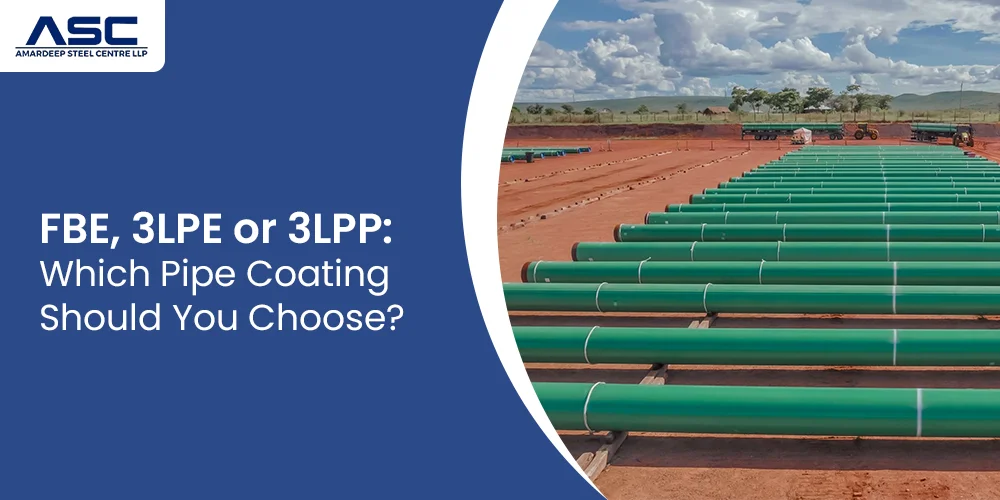
Pipe coating systems that are external to pipes help prevent corrosion of steel pipes that occur due to soil, moisture, chemicals, and marine environments. Three main types of such coating systems are fusion bonded epoxy, three layer polyethylene, and three layer polypropylene. Each type offers varying degrees of corrosion protection, mechanical strength, and heat resistance. The fusion bonded epoxy coating is good for its adhesive properties, while the 3 layer polyethylene coating provides both the protection of epoxy and the toughness of polyethylene. Selection of the appropriate coating system is based on temperature of operations, installation, handling considerations, and standards for coatings.
There are various corrosive threats posed by water, chemicals, salts, and sea water for steel pipes. The external coating ensures that there is protection of the steel surface, while the cathodic protection offers another form of protection against corrosion. Choosing an inappropriate coating would result in the early disbondment, mechanical damage and corrosion under the coating, leading to increased costs of maintenance. The choice of the appropriate coating is determined by two elements. These include temperature of operation and installation. This implies that different pipes are exposed to different temperatures and mechanical stress depending on their application; be it buried pipe, off-shore pipe, and pipes installed using HDD.
Fusion bonded epoxy (FBE) is a one-layer thermoset powder coated over heated steel pipes where it melts and fuses chemically to the prepared surface. It is corrosion resistant, adheres well and is compatible with cathodic protection, suitable for pipeline installations in the ground. FBE coatings are available to meet a variety of standards including: ISO 21809-2 and CSA Z245.20; and thicknesses can be chosen depending on the project requirements. But FBE is less impact and abrasion resistant than thicker coating systems. If the installation is particularly challenging, like horizontal directional drilling (HDD), it may be necessary to use an abrasion resistant overcoat or a harder coating system.
Three-layer polyethylene (3LPE) is an external pipeline coating system that combines corrosion resistance with strong mechanical protection. It consists of a fusion bonded epoxy (FBE) primer, a copolymer adhesive layer, and a polyethylene outer layer. The epoxy protects the steel against corrosion, the adhesive bonds the layers, and the polyethylene resists impact, abrasion, and moisture penetration. This combination makes 3LPE suitable for buried onshore oil, gas, and water pipelines exposed to soil stress and handling damage. The coating system is covered by standards such as ISO 21809-1, DIN 30670, and CSA Z245.21, with thickness and performance requirements determined by project specifications.
Galvanised coating applies a layer of zinc to steel pipe, most commonly by hot dip galvanising. It protects the steel in two ways. The zinc acts as a physical barrier, and it also protects sacrificially, corroding in preference to the steel at scratches or damaged spots.
Galvanising generally costs less than FBE or three layer systems. It is common on above ground structural piping, scaffolding tube, fencing, and water pipe in non aggressive soil. It is not normally specified for buried oil and gas transmission pipelines, where FBE, 3LPE or 3LPP give much better long term corrosion protection and are the standard specification under ISO 21809.
If your project needs plain carbon steel pipe to be coated or galvanised afterwards, see our range of carbon steel pipes.
Internal pipe coating is specified independently of the external coating. It is driven by the fluid being carried, not by soil or burial conditions.
Specify the internal and external coating together on the same pipe order. The internal lining has no bearing on the external coating's temperature or mechanical rating, and the reverse is also true. If the line will also be inspected by pigs, check that the internal lining and any weld areas will allow pig passage. Our guide to piggable pipes explains what to look for.
The table puts the three main systems side by side. Figures are typical values from the governing standards and industry data. They vary slightly by source and by coating grade, so confirm them against the current standard and your project specification.
|
Property |
FBE |
3LPE |
3LPP |
|
Layer structure |
Single epoxy layer |
FBE primer + adhesive + PE |
FBE primer + adhesive + PP |
|
Thickness (external) |
About 400 to 600 microns |
About 1.8 to 3.0 mm |
About 2.0 to 4.0 mm |
|
Max continuous temperature |
About 80 to 95 degrees C, grade dependent |
About 80 degrees C |
About 110 degrees C |
|
Short term peak |
Higher for modified grades |
Grade dependent |
Higher still for some grades |
|
Governing standard |
ISO 21809-2, CSA Z245.20 |
ISO 21809-1, DIN 30670, CSA Z245.21 |
ISO 21809-1, DIN 30678 |
|
Mechanical and abrasion resistance |
Moderate, brittle under impact |
High |
Very high, suited to HDD |
|
Typical use |
Water pipe, above ground, internal lining |
Onshore buried gas and oil, below 80 degrees C |
Hot or waxy crude, HDD, deepwater |
|
Project Scenario |
Recommended Coating |
Why |
|
Onshore buried gas pipeline below 80 degrees C |
3LPE |
Mechanical protection and soil stress resistance |
|
Onshore buried crude or waxy crude above 80 degrees C |
3LPP |
Standard 3LPE is limited to about 80 degrees C |
|
HDD installation |
3LPP |
Better abrasion resistance during pull-through |
|
Offshore or subsea pipeline |
3LPE or 3LPP, usually with a concrete weight coat |
Mechanical protection and temperature range |
|
Above ground piping |
FBE with a paint topcoat |
Three layer systems degrade under prolonged UV unless protected |
|
Well casing, external |
FBE |
Thinner profile and lower soil stress |
|
Water injection or produced water lines |
3LPE external with internal FBE lining |
Corrosion protection inside and out |
|
Above ground structural or non critical buried piping on a limited budget |
Galvanised coating |
Lower cost |
|
Maintenance recoating of older coal tar epoxy sections |
Coal tar epoxy repair system matched to the existing coating |
Compatibility |
This is a starting point. The final choice depends on the project specification, such as an operator standard, and on the coating applicator's qualified procedures.
FBE is a single epoxy layer with strong chemical bonding but limited mechanical protection. 3LPE and 3LPP add polyethylene or polypropylene outer layers over an FBE primer for mechanical protection, and 3LPP is rated for a higher operating temperature than 3LPE.
Standard 3LPE is typically limited to about 80 degrees Celsius continuous service. For higher temperatures, 3LPP, rated to about 110 degrees Celsius continuous, is normally specified instead. Confirm the exact limit with the coating supplier.
It has largely been phased out of new pipeline construction in favour of FBE, 3LPE and 3LPP, but it still appears in maintenance recoating of older pipeline sections already coated with it.
FBE is governed by ISO 21809-2 and CSA Z245.20. 3LPE is governed by ISO 21809-1, DIN 30670 and CSA Z245.21. 3LPP is governed by ISO 21809-1 and DIN 30678.
Galvanised coating is generally used on above ground structural piping and non critical buried piping in non aggressive soil. It is not used on buried oil and gas transmission pipelines, where FBE, 3LPE or 3LPP are standard.
No. Internal coating is selected based on the fluid being carried, not on soil or burial conditions, and is specified separately from the external coating system.
Stainless Steel Metal Fabrication is a very specialised process and is very different from carbon steel, as it has a very different metallurgical behaviour.