
Alloy Steel Boiler Tubes Manufacturer and Supplier
Amardeep Steel Centre LLP supplies alloy steel boiler tubes to ASTM A213 for superheater, reheater and high temperature boiler service. Our alloy steel boiler tubes are available in Cr-Mo grades from T5 through T92, IBR certified where required, with full mill test certificates on every heat. For a full carbon steel and alloy steel boiler tube grade selection guide, see our Boiler Tubes page.
What Are Alloy Steel Boiler Tubes?
Alloy steel boiler tubes are seamless chromium molybdenum (Cr-Mo) tubes used where carbon steel cannot meet the creep rupture strength needed above roughly 480°C. As boiler operating temperatures and pressures increase toward supercritical and ultra supercritical conditions, chromium and molybdenum content is increased in the tube material to maintain strength over the design service life.
These grades are covered under ASTM A213 (seamless ferritic and austenitic alloy steel boiler and heat exchanger tubes) and are used for superheater, reheater and high pressure boiler drum tubing.
Alloy Steel Boiler Tubes Grades (ASTM A213)
| Grade | Nominal Composition | Max Service Temp | Typical Application |
|---|---|---|---|
| T5 | 5Cr-0.5Mo | 600°C | Fired heater tubes, sulphidic corrosion service |
| T9 | 9Cr-1Mo | 620°C | High temperature fired heater tubes |
| T11 | 1.25Cr-0.5Mo-Si | 593°C | Superheater and reheater tubes |
| T22 | 2.25Cr-1Mo | 649°C | Power station boilers, HRSG superheater |
| T91 | 9Cr-1Mo-V modified | 650°C | Ultra supercritical boiler superheater and reheater |
| T92 | 9Cr-0.5Mo-1.8W-V | 650°C and above | Advanced ultra supercritical boilers |
Alloy Steel Boiler Tubes Types
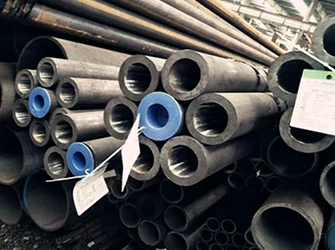
A213 Chrome Moly Finned Tube
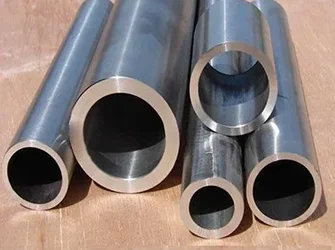
Alloy Steel Boiler Tubes
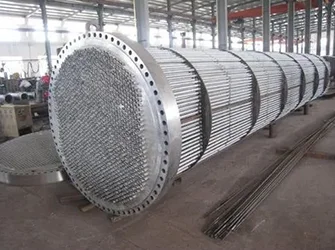
Alloy Steel Condenser Tubes
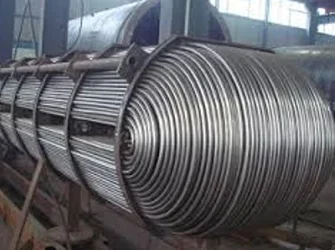
Alloy Steel Heat Exchanger Tube
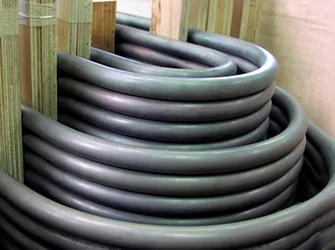
Alloy Steel U Tube
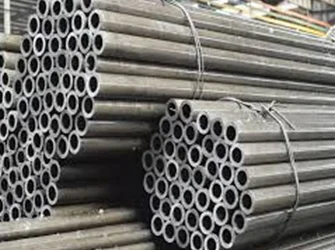
ASME SA213 Chrome Moly Water Tube Boiler
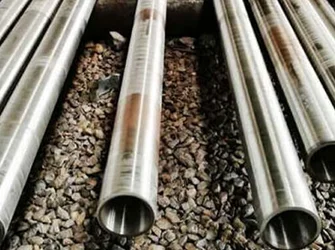
ASTM A213 Alloy Steel Boiler Fin Tube
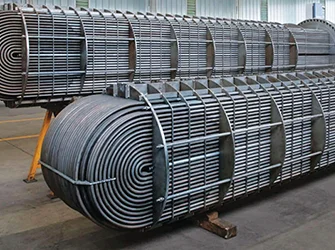
Chromoly U Tube Bundle Heat Exchanger
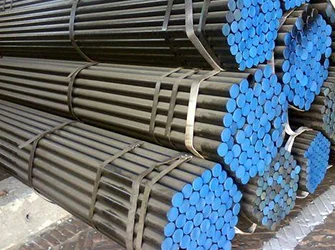
Low Alloy Steel seamless boiler tubes
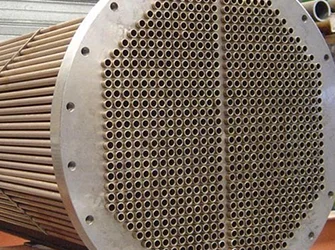
SA 213 Alloy Steel seamless heat exchanger tubes
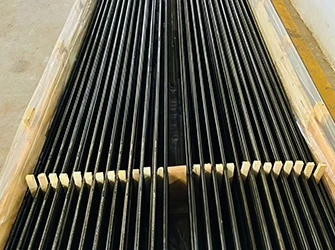
SA 213 Chromoly Boiler Superheater Tube Material
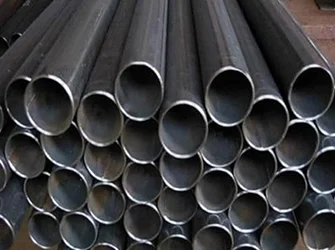
Seamless Alloy Steel Tube
T11 vs T22 vs T91 Alloy Steel Boiler Tubes
T11 and T22 are both low alloy Cr-Mo grades, but T22 carries higher chromium and molybdenum content, giving it better creep strength and a higher rated service temperature, so it is typically specified for higher pressure power station boilers where T11 falls short.
T91 is specified when a project moves into ultra supercritical territory, where even T22 cannot sustain the required creep life. T91 needs a controlled normalized and tempered heat treatment and a carefully managed post weld heat treatment (PWHT) to achieve its rated properties, so it carries additional fabrication requirements compared with T11 or T22.
Chemical Composition and Mechanical Properties
Full chemical composition (carbon, chromium, molybdenum, vanadium) and mechanical property limits (tensile strength, yield strength, elongation) for each grade are confirmed on the mill test certificate issued with every heat. Contact us with the exact grade for a data sheet in MPa and ksi.
Heat Treatment for Alloy Steel Boiler Tubes
T91 and T92 alloy steel boiler tubes are supplied in the normalized and tempered condition to achieve rated creep strength. Buyers fabricating with T91 or T92 should plan for a controlled post weld heat treatment cycle, since improper PWHT is one of the most common causes of premature failure in these grades.
Applications of Alloy Steel Boiler Tubes
- Superheater and reheater tubing in power station boilers
- Ultra supercritical and supercritical boiler circuits (T91, T92)
- Heat recovery steam generator (HRSG) superheater sections
- Refinery fired heater tubes
Testing and Certification for Alloy Steel Boiler Tubes
- Hydrostatic pressure test
- Ultrasonic and eddy current testing
- Hardness testing, particularly important on T91 and T92 after PWHT
- Mill test certificate per EN 10204 3.1B, IBR Form III B on request
Why Choose Amardeep Steel Centre for Alloy Steel Boiler Tubes
- Single source for carbon steel and alloy steel boiler tubes on the same order
- IBR Form III B for India registered boiler projects
- Full chemical and mechanical test reports on every heat
- Third party inspection support (SGS, BV, Lloyd's, TUV)
Alloy Steel Boiler Tubes FAQs
Q. What is the difference between T11 and T22 alloy steel boiler tube?
T11 (1.25Cr-0.5Mo) and T22 (2.25Cr-1Mo) are both ASTM A213 Cr-Mo grades, but T22 has more chromium and molybdenum, which gives it better creep strength and a higher rated service temperature of 649°C compared with 593°C for T11. T22 is generally specified for higher pressure power station boilers.
Q. When is T91 boiler tube required instead of T22?
T91 is used for ultra supercritical boiler service where operating conditions exceed what T22 can reliably sustain over the design creep life. T91 needs strict normalized and tempered heat treatment plus controlled post weld heat treatment to deliver its rated properties.
Q. Do alloy steel boiler tubes need IBR certification?
Yes, for any boiler registered under Indian Boiler Regulations. We issue IBR Form III B along with the standard EN 10204 3.1B mill test certificate for all IBR applicable alloy steel boiler tube grades.
Q. What is the difference between alloy steel boiler tubes and alloy steel heat exchanger tubes?
The two often share the same ASTM A213 grade, but boiler tubes are qualified as boiler pressure parts under ASME Section I or IBR, while heat exchanger tubes serve process duty under ASME Section VIII and TEMA. See our Alloy Steel Heat Exchanger Tubes page for that distinction.
Explore related pages: Boiler Tubes | Alloy Steel Heat Exchanger Tubes | Alloy Steel Finned Tubes | Alloy Steel Products
Request a Quote for Alloy Steel Boiler Tubes
Share the following and our technical team will respond within 24 hours:
- Grade or standard (for example ASTM A213 T22, T91)
- Size, OD or NPS and wall thickness or schedule
- Quantity in metres, kg or number of tubes
- Any IBR, third party inspection or PWHT requirement
