
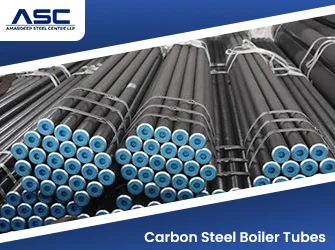
Carbon Steel Boiler Tubes Manufacturer, Supplier & Exporter in India
Carbon steel boiler tubes are seamless, heat-transfer tubes made primarily of iron and carbon used to carry water, steam and hot flue gas inside boilers, economisers and heat exchangers. The single most important selection rule is the temperature ceiling: carbon steel performs reliably up to roughly 425–480 °C (800–900 °F). Above that band the steel becomes vulnerable to graphitization, and alloy steel must be specified instead. That threshold is exactly why you need to pin down the right grade before you buy. Amardeep
Steel Centre manufactures, stocks and exports carbon steel boiler tubes for procurement engineers, boiler OEMs, EPC contractors and MRO buyers who require the right grade, verified specifications and a certified, export-ready supply available from stock.
What Are Carbon Steel Boiler Tubes?
A carbon steel boiler tube is a pressure tube made mainly of iron and carbon, with small additions of manganese and silicon, used to transfer heat between combustion gas and the water or steam inside a boiler. It efficiently conducts heat while withstanding internal pressure, and is the standard low-cost choice up to about 425–480 °C.
Boiler tubes work in two broad boiler layouts. In a water-tube boiler, water flows inside the tubes and hot gas surrounds them, the arrangement used for high-pressure, high-capacity steam generation such as power-plant boilers. In a fire-tube boiler, hot gas passes through the tubes while water surrounds them common in packaged industrial and low-pressure boilers. In both, carbon steel is the default material because it combines good thermal conductivity, adequate strength, excellent weldability and low cost with wide availability. For larger-bore steam header and downcomer service you would step up to our seamless boiler pipes; for the tube bundles inside the boiler and its heat exchangers, the grades below are what specifiers reach for. These products sit within our wider range of carbon steel pipes & tubes and carbon steel products.
Technical Data
Carbon Steel vs Alloy Steel vs Stainless Steel Boiler Tubes (Selection Guide)
The choice between carbon, alloy and stainless steel boiler tubes comes down to operating temperature, corrosion environment and budget. Use the decision table below to confirm carbon steel is right for your duty before you request a grade. For a broader view of the family, see our boiler tubes overview.
| Selection factor | Carbon Steel (A179 / A192 / A210) | Alloy Steel (T11 / T22 / T91) | Stainless Steel (TP304 / TP347) |
|---|---|---|---|
| Max service temperature | Up to ~425–480 °C | ~550–650 °C | 650 °C and above |
| Key limitation | Graphitization above the ceiling | Higher cost; needs PWHT on welds | Highest cost; not for reducing/sulphidising gas |
| Corrosion resistance | Modest | Moderate (Cr-Mo) | High |
| Relative cost | Lowest | Medium | Highest |
| Typical duty | Economisers, waterwalls, LP boilers, heat exchangers | Superheaters, reheaters, high-temp headers | Final superheaters, corrosive/high-purity service |
If your tube metal temperature stays below the carbon-steel ceiling, the grades on this page are the most cost-effective, weldable and available option. If you sit above it, move to an ASTM A53 carbon steel tube only for low-pressure/structural duty, or step up to alloy grades for superheater service.
Carbon Steel Boiler Tube Grades & Standards
Carbon steel boiler tubes are specified across ASME/ASTM, British, German and Japanese standards. The three ASTM grades below cover the vast majority of boiler and heat-exchanger requirements, with regional equivalents used where project or IBR paperwork demands them.
| Grade / Standard | Type | Carbon level | Primary use |
|---|---|---|---|
| ASTM A179 / ASME SA179 | Seamless, cold-drawn | Low carbon | Heat exchangers & condensers |
| ASTM A192 / ASME SA192 | Seamless | Low carbon | High-pressure boiler tubes |
| ASTM A210 Gr A1 / SA210 | Seamless, medium carbon | Medium carbon | Boiler & superheater tubes |
| ASTM A210 Gr C / SA210 | Seamless, medium carbon | Higher carbon/Mn | Higher-strength boiler duty |
| BS 3059 Gr 320 / 360 | Seamless / welded | Low carbon | UK & export boiler projects |
| DIN 17175 / EN 10216-2 | Seamless | Low carbon (P235GH/P265GH) | European pressure service |
| JIS G3461 (STB) | Seamless | Low carbon | Japanese boiler standard |
Grade-level detail is available on our dedicated pages: ASTM A179 tube specification, ASTM A192 boiler tube, ASTM A210 Grade A1 tube, BS 3059 carbon steel boiler tubes and the BS 3059 Grade 360 boiler tube. For how the standards map to service conditions, see our boiler tube material specification guide.
Dimensions & Size Range of Carbon Steel Boiler Tubes
We supply carbon steel boiler tubes across the standard boiler and heat-exchanger size band, with larger and custom sizes produced to order. You can estimate tube mass with our calculate boiler tube weight tool.
| Parameter | Range |
|---|---|
| Outside diameter (OD) | 12.7 mm to 139.7 mm (1/2" to 5-1/2"); larger to order |
| Wall thickness (WT) | 1.2 mm to 12.7 mm |
| Schedules | Sch 10, 40, 80, 160, XS, XXS and BWG gauges |
| Lengths | Single random, double random, and exact cut length |
| Form | Straight length or U-bent for exchanger bundles |
| End finish | Plain, bevelled or as per drawing |
Dimensional Tolerances of Carbon Steel Boiler Tubes
Tolerances follow ASTM A450 (the general requirements standard for carbon steel tubes). Representative cold-drawn seamless tolerances are shown below; exact figures depend on size and are confirmed at inspection.
| Attribute | Cold-drawn tolerance (typical) |
|---|---|
| Outside diameter (OD ≤ 38.1 mm) | ±0.10 mm |
| Outside diameter (OD > 38.1 mm) | ±0.25% of OD |
| Wall thickness | ±10% |
| Ovality | Within the OD tolerance band |
| Cut length | +3.2 mm / −0 mm |
Testing & Inspection of Carbon Steel Boiler Tubes
Testing (Destructive, Non Destructive)
| Positive Material Identification – PMI Testing | Hydrostatic Test |
|---|---|
| Chemical Analysis – Spectro Analysis | Hydrogen-Induced Cracking (HIC) Test |
| Mechanical Testing Such as Tensile, Elongation, Reduction of Area | Sulfide Stress Corrosion Cracking (SSC), NACE TM 0177 |
| Micro Test | Radiography Test |
| Macro Test | Dye Penetrant Test (DP Test) |
| Hardness Test | Ultra Sonic Test (UT) |
| Pitting Resistance Test | Eddy Current Testing |
| Intergranular Corrosion (IGC) Test | Impact Test |
| Flaring Test | Bend Test |
| Flattening Test |
See our certifications for the full list of approvals.
Carbon Steel Boiler Tubes Price
| Product | Approx. Price* |
|---|---|
| Carbon Steel Boiler Tube | US$ 1,760 – 3,260 per Ton |
| Carbon Steel Boiler Tube (India) | US$ 630 – 1,575 per Ton |
| Carbon Steel Seamless Boiler Tube | US$ 1,675 – 3,650 per Ton |
| Carbon Steel Welded Boiler Tube | US$ 525 – 1,960 per Ton |
| Carbon Steel Boiler Tube (Premium Grades) | US$ 2,330 – 3,460 per Ton |
| Carbon Steel Boiler Tube Price per Kg | US$ 8 – 33 per Kg |
| Carbon Steel Boiler Tube Price per Piece | US$ 5 – 187 per Piece |
*Disclaimer: Prices are indicative only and vary based on material grade, outside diameter, wall thickness, schedule, length, manufacturing process (seamless or welded), quantity ordered, testing requirements, and destination.
Types Of Carbon Steel Boiler Tubes
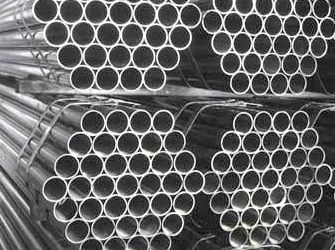
Carbon Steel Welded Boiler Tube
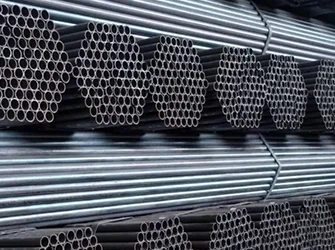
Carbon Steel Water Tube Boiler
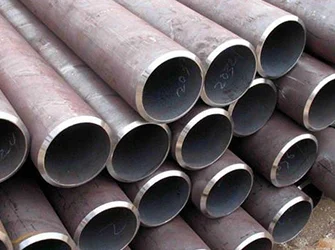
Carbon Steel Seamless Boiler Tube
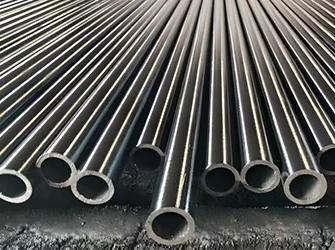
Carbon Steel Boiler Vent Pipe
Range of Carbon Steel Boiler Tubes
- Carbon Steel Boiler Tube
- Carbon Steel Boiler Tubing
- Carbon Steel Seamless Boiler Tube
- Carbon Steel ERW Boiler Tube
- Carbon Steel Fire Tube Boiler Tube
- Carbon Steel Boiler Flue Pipe
- Carbon Steel Boiler Vent Pipe
- Carbon Steel Round Boiler Tube
- Metric Carbon Steel Boiler Tubing
- Schedule 5 Carbon Steel Boiler Tube
- Schedule 10 Carbon Steel Boiler Tube
- Schedule 40 Carbon Steel Boiler Tube
- Schedule 80 Carbon Steel Boiler Tube
- Schedule 160 Carbon Steel Boiler Tube
- Schedule XS Carbon Steel Boiler Tube
- Schedule XXS Carbon Steel Boiler Tube
Manufacturing Process of Carbon Steel Boiler Tubes
Seamless carbon steel boiler tubes are made from a solid steel billet rather than from rolled-and-welded strip, which is why they suit cyclic pressure and thermal service so well. The route runs in a controlled sequence, and understanding it explains both the quality and the certification a buyer receives.
First, a round billet is heated and pierced and hot-rolled over a mandrel to form a hollow mother tube. That hollow is then cold-drawn through a die and plug to bring the outside diameter, wall thickness and surface finish to close tolerance the step that gives boiler tubes their dimensional accuracy and clean bore. The drawn tube is heat-treated, typically by normalizing, to relieve the stresses introduced by cold work and restore a uniform, ductile grain structure. It is then pickled to remove scale, straightened, and finally passed through the full testing and inspection regime before release. Each stage is recorded, so the heat-treatment chart and test results travel with the material. For a fuller walkthrough see how boiler tubes are manufactured and the different types of boiler tubes for power plants.
Applications of Carbon Steel Boiler Tubes
Carbon steel boiler tubes serve wherever heat is transferred below the carbon-steel temperature ceiling. Common installations include the economiser and waterwall sections of fossil-fuel power stations, heat-recovery steam generators (HRSGs) in combined-cycle plants, and boilers in sugar mills, cement-plant waste-heat boilers, refineries and process plants. They are equally standard in shell-and-tube heat exchangers and condensers, and in packaged low- and medium-pressure industrial boilers. For an adjacent low-pressure instrument application, see our carbon steel instrumentation tubing.
Advantages of Carbon Steel Boiler Tubes
Carbon steel remains the default boiler-tube material for good engineering reasons. It is the lowest-cost option with the widest availability, so lead times and budgets stay tight. It offers excellent weldability, simplifying fabrication and in-service repair. Its good thermal conductivity supports efficient heat transfer, and grades from A192 to A210 Gr C provide adequate strength right up to the temperature threshold covering the majority of boiler duty without paying an alloy premium.
Why Choose Amardeep Steel Centre
As an established manufacturer and stockist of carbon steel products, we hold carbon steel boiler tubes in A179, A192 and A210 ex-stock in Mumbai for fast domestic dispatch and export. Every order ships with IBR Form III-B where required, EN 10204 3.1/3.2 mill test certificates, and full third-party inspection (TPI) support from agencies such as Lloyd's, BV, DNV, TÜV and SGS the same paperwork that domestic IBR projects and marine boiler buyers both demand. With complete export documentation and supply to 100+ countries, we serve procurement teams across the Middle East, South-East Asia and Africa as readily as Indian EPC contractors. Ready to move forward? Request a Quote.
Frequently Asked Questions
What is a carbon steel boiler tube?
A carbon steel boiler tube is a seamless or welded tube made mainly of iron and carbon, used to carry water, steam or hot gas inside boilers and heat exchangers. It transfers heat efficiently and is the standard low-cost choice up to about 425–480 degrees Celsius.
What is the maximum temperature for carbon steel boiler tubes?
Carbon steel boiler tubes are generally suitable up to about 425–480 degrees Celsius (800–900 degrees Fahrenheit). Above this range the risk of graphitization increases, so alloy steel grades such as T11, T22 or T91 are specified instead.
What is the difference between ASTM A179, A192 and A210?
ASTM A179 is a low-carbon cold-drawn tube for heat exchangers and condensers. A192 is a low-carbon tube rated for high-pressure boiler service. A210 is a medium-carbon grade (A1 and C) offering higher tensile strength for boilers and superheaters.
Are your carbon steel boiler tubes IBR approved?
Yes. We supply carbon steel boiler tubes with IBR Form III-B certification for the Indian market, along with EN 10204 3.1 or 3.2 mill test certificates and third-party inspection reports for export orders.
Are carbon steel boiler tubes seamless or welded?
Boiler tubes to ASTM A179, A192 and A210 are cold-drawn seamless tubes, which suit the pressure and cyclic-heat conditions of boilers. Welded (ERW) carbon steel tubes are available for lower-pressure and structural applications on request.
What sizes of carbon steel boiler tubes do you supply?
We stock carbon steel boiler tubes from roughly 12.7 mm to 139.7 mm outside diameter, with wall thickness from about 1.2 mm to 12.7 mm, in single and double random or cut lengths. Larger and custom sizes are produced to order.
What is graphitization in carbon steel boiler tubes?
Graphitization is the breakdown of iron carbide into graphite nodules after long exposure above about 425–480 degrees Celsius. It weakens the tube and can cause failure, which is why carbon steel is limited to moderate temperatures and alloy steel is used above them.
Which standards cover carbon steel boiler tubes besides ASTM?
Besides ASTM/ASME A179, A192 and A210, carbon steel boiler tubes are also supplied to BS 3059, EN 10216-2, DIN 17175 and JIS G3461, allowing us to match domestic IBR projects and international export specifications.
Get a Quote on Carbon Steel Boiler Tubes
Carbon steel boiler tubes in ASTM A179, A192 and A210 give you the most cost-effective, weldable and readily available heat-transfer tube for any duty below the carbon-steel temperature ceiling backed by IBR and full mill certification. Tell us your grade, size and quantity and we will respond with pricing and availability from stock.
Request a Quote