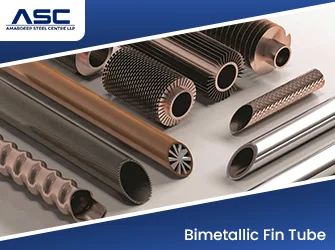
Bimetallic Fin Tube Manufacturer, Supplier & Exporter in India
L-Type • KL-Type • G-Type • Extruded Aluminium
No single metal does everything an air cooler asks of a tube. The inside has to hold process fluid under pressure and resist whatever that fluid can do to it, often at high temperature. The outside has to shed heat into the air as fast as possible, which calls for a light metal that conducts heat well and can be shaped into thin fins. A bimetallic fin tube gives each job to the right metal.
little. How the aluminium is fixed to the tube decides how well the two stay in contact, how hot the tube can run and how well it survives weather and corrosion. That is the difference between L, KL, G and extruded fin tubes.
The base tube is chosen for the process side, usually carbon steel, stainless steel, copper-nickel or brass. The fins are aluminium, which moves heat well and costs
Amardeep Steel Centre supplies bimetallic fin tubes in all four fin types, on the base tube material your process needs. Every order ships with an EN 10204 3.1 mill test certificate.
Bimetallic Fin Tube Types
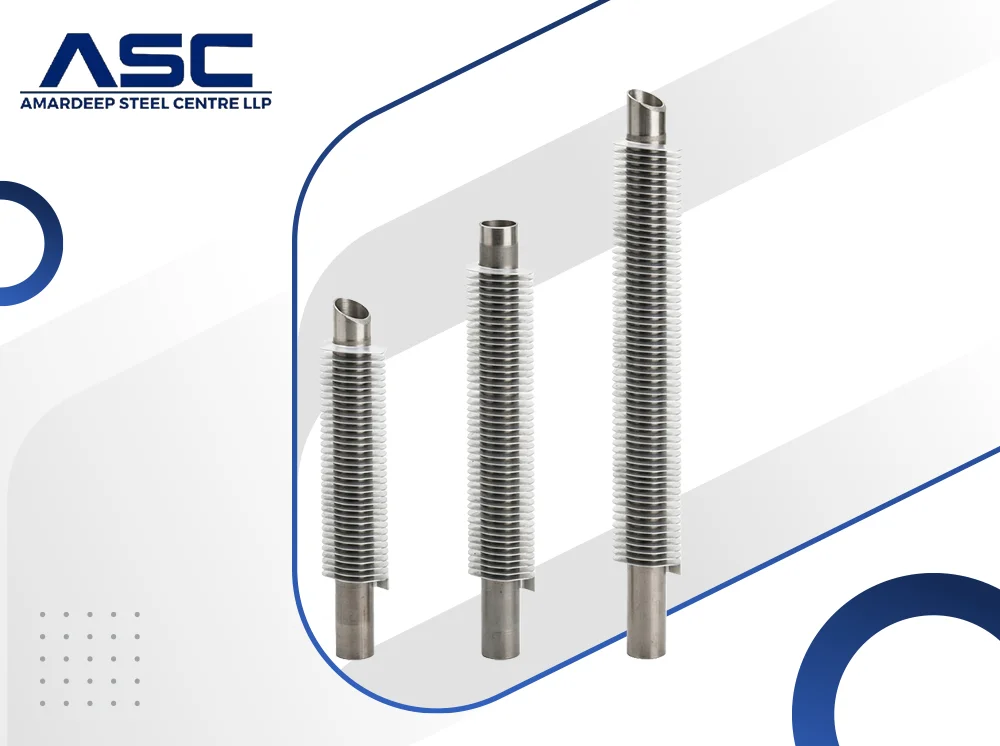
Bimetallic L-type fin tubes
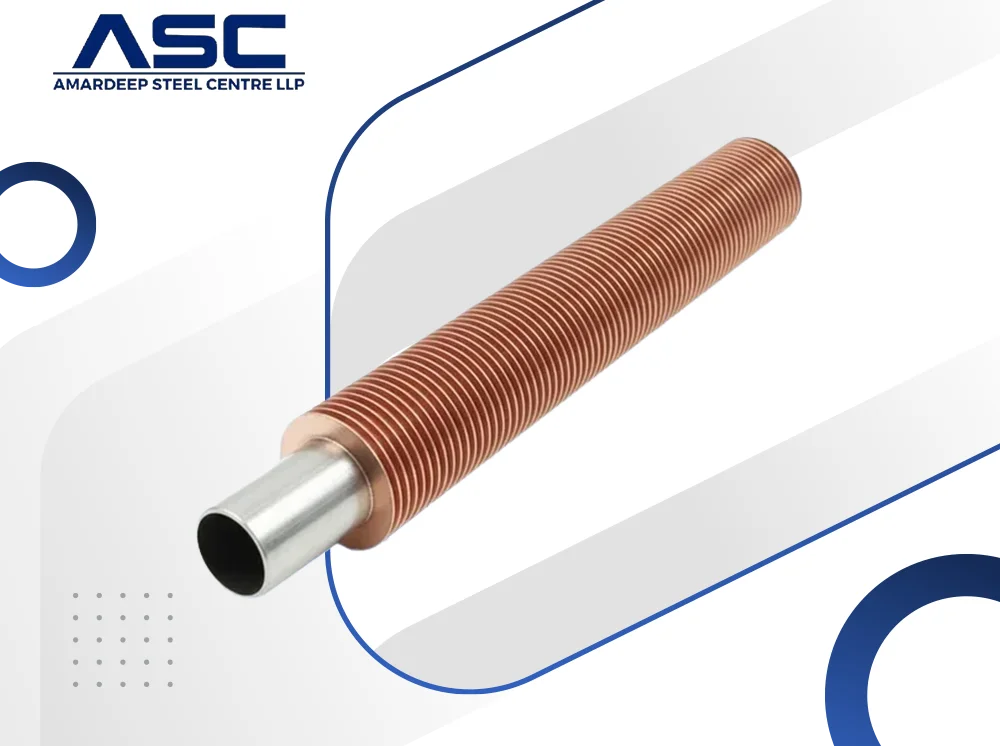
Bimetallic KL-type fin tubes
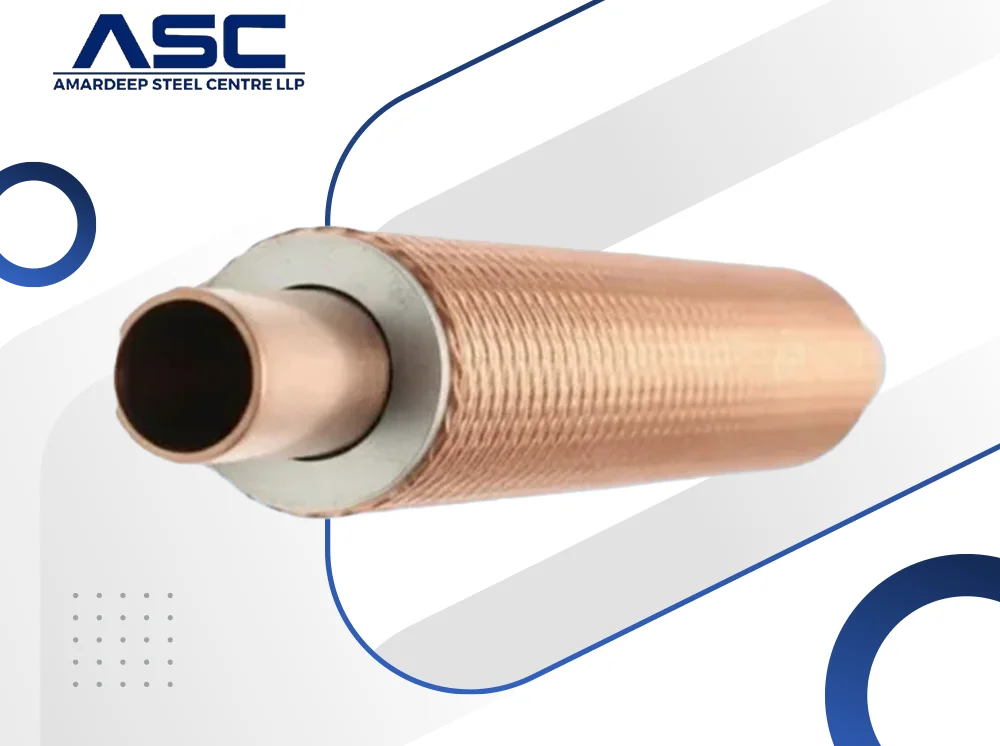
Bimetallic G-type fin tubes
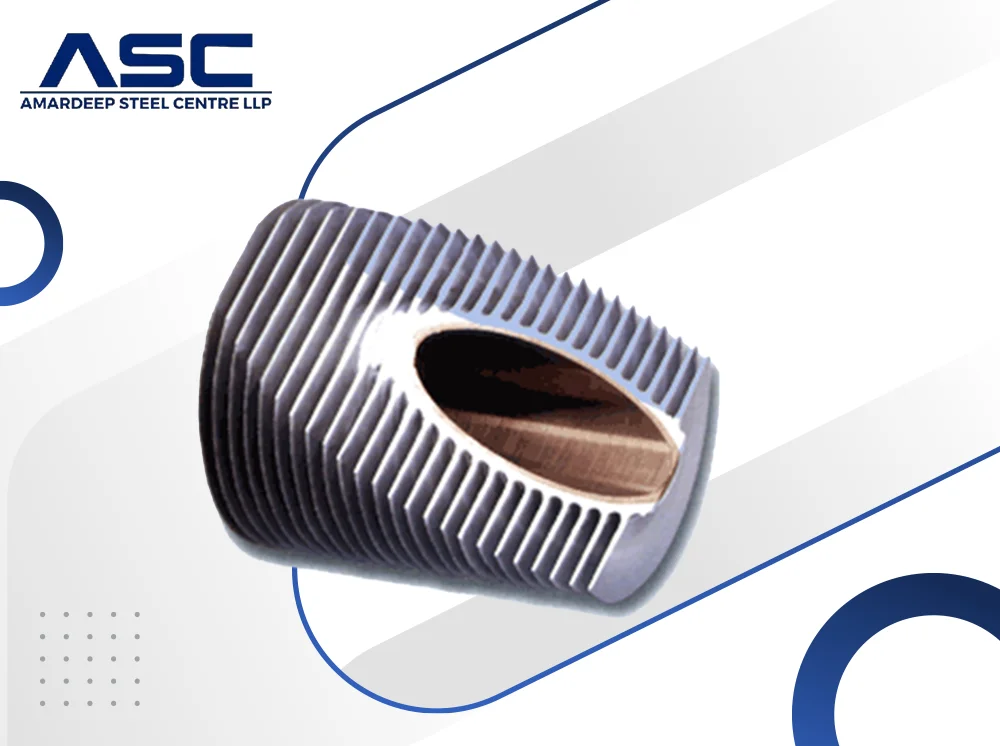
Extruded aluminium bi-metallic fin tubes
Fin Type Comparison
| L-type | KL-type | G-type | Extruded | |
|---|---|---|---|---|
|
Typical maximum temperature |
about 150 °C |
about 260 °C |
about 400 °C |
about 300 °C |
|
Fin-to-tube bond |
Tension only |
Tension + knurl |
Mechanical lock in groove |
Rolled from one solid sleeve |
|
Base tube protection from air |
Good (foot covers tube) |
Good |
Exposed between fins |
Full (sleeve covers tube) |
|
Relative cost |
Lowest |
Low |
Medium |
Highest |
Materials of Bimetallic Fin Tubes
| Base tube (process side) | Fin material |
|---|---|
|
Carbon steel – ASTM A179, A214, A106 |
Aluminium (1060, 1100) |
|
Stainless steel – ASTM A213, A249, A312 |
Aluminium |
|
Copper-nickel – ASTM B111 C70600, C71500 |
Aluminium or copper |
|
Admiralty and aluminium brass – ASTM B111 |
Aluminium or copper |
|
Copper – ASTM B111 |
Aluminium or copper |
See our carbon steel finned tubes, stainless steel finned tubes, cupro-nickel fin tubes, admiralty brass fin tubes and aluminium brass fin tubes.
Applications of Bimetallic Fin Tubes
- Air-cooled heat exchangers in refineries and petrochemical plants
- Gas compressor and engine coolers
- Power plant air-cooled condensers
- Lube oil and process coolers
- Steam and hot-water air heaters
- HVAC and industrial drying equipment
- Natural gas processing and LNG plants
For other fin designs, see extruded finned tubes, longitudinal finned tubes and our full finned tubes range.
Send us the base tube material and size, fin type, fin height, fins per inch, length and quantity for a quote.
FAQs – Bimetallic Fin Tubes
What is a bimetallic fin tube?
A finned tube made of two metals. The base tube, chosen for pressure and corrosion resistance, carries the process fluid, and aluminium fins on the outside transfer heat to the air.
What is the difference between L, KL, G and extruded fin tubes?
L-type fins are wound tightly around the tube with a foot. KL-type fins are knurled into the tube surface for a stronger grip. G-type fins are embedded in a groove cut into the tube. Extruded fins are formed from a thick aluminium sleeve rolled over the tube, giving the best bond and corrosion protection.
Which bimetallic fin tube is best for high temperatures?
G-type embedded fins, which hold their grip at temperatures where wound fins would loosen.
Which bimetallic fin tube is best for corrosive or coastal sites?
Extruded aluminium bimetallic tubes, because the aluminium sleeve covers the whole base tube and keeps air and moisture away from it.
Our Products
