Why Aluminium Alloys Are Widely Used in Aerospace Engineering
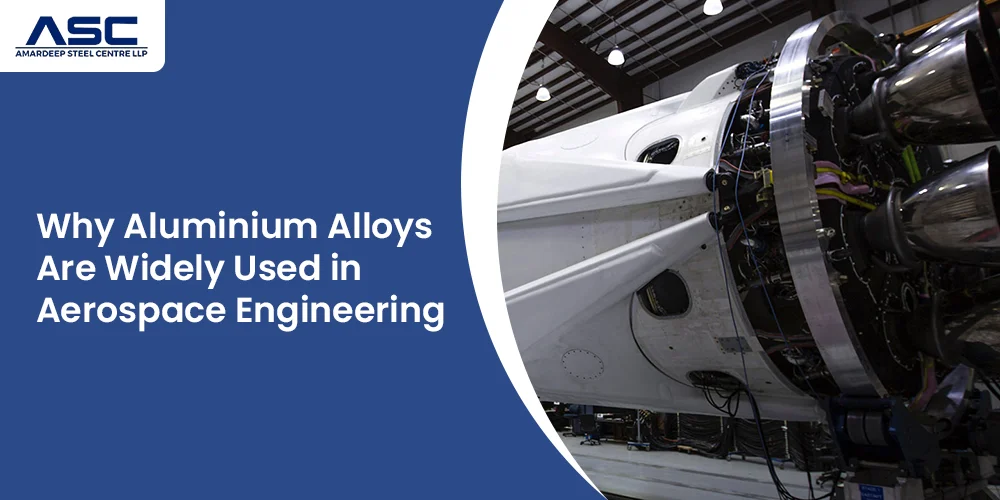
Why Aluminium Alloys Are Widely Used in Aerospace Engineering
If you have ever wondered why aluminium alloys are used in aerospace when titanium and carbon fibre composites are also available, the answer is balance. No other metal combines such light weight, useful strength, fatigue life, corrosion protection, simplicity of production, and reasonable cost at the same time. Aluminium weighs approximately one-third of steel, so a structural part of the same size and shape weighs roughly one-third as much. The most modern aircraft use more composites and titanium, but let's touch upon that later. Before that, a quick note: in North America, the spelling of the metal is aluminium, which means if you are looking for aerospace aluminium and aerospace aluminium alloys, you are in the right place.
|
Key takeaways • Aluminium alloys win on overall balance: low density, high specific strength, fatigue life, corrosion protection, formability and cost. • The alloys that matter most are 2024 for fatigue critical skins, 7075 and 7050 for heavily loaded wing structure, and 6061 for fittings and secondary parts. • The picture is changing: composites are about half the weight of the Boeing 787 and aluminium about a fifth, yet aluminium stays the main structural metal on many other aircraft. • The main limits are heat above roughly 150 to 200 degrees Celsius, stress corrosion in some tempers, galvanic contact and poor fusion weldability. • Looking for material? Browse our aluminium products for plate, sheet, bar, tube and fasteners. |
|---|
Why Aluminium Alloys Suit Aircraft Structures at a Glance
Aluminium alloys are widely used in aerospace because they combine low density, high specific strength, good fatigue life, reliable corrosion protection, easy forming and joining, sensible cost and a long record of certified data. The table below sets out each reason and what it means for an aircraft, and together they explain why aluminium aerospace applications span skins, frames, tanks and tubing.
Reasons aluminium alloys suit aircraft
|
Reason |
What it means |
Aerospace consequence |
|---|---|---|
|
Low density |
About 2.7 grams per cubic centimetre, roughly one third of steel |
Less structural weight, lower fuel burn, more payload |
|
Specific strength |
Alloys such as 7075 reach about 570 MPa typical tensile strength |
Thin, light skins and frames that still carry the load |
|
Fatigue and damage tolerance |
2xxx alloys resist crack growth under repeated tension |
Long airframe life between inspections |
|
Corrosion protection |
Natural oxide film, plus cladding and anodising |
Predictable maintenance in wet and salty air |
|
Formability and machinability |
Forms, extrudes and machines easily |
Complex skins, stringers and integrally machined parts |
|
Joining |
Riveting, bonding and friction stir welding |
Proven assembly methods with well known inspection |
|
Cost and supply |
Lower cost than titanium or carbon fibre, with mills worldwide |
Affordable to build and to repair |
|
Certified data |
Decades of design allowables and repair schemes |
Lower certification risk for designers |
The Engineering Reasons Behind Aluminium Alloys in Aerospace
Aerospace aluminum remains widely used because aluminium alloys for aerospace combine low weight, strength, corrosion resistance, manufacturability, cost efficiency and established certification.
Strength-to-weight ratio
Pure aluminium is soft, but alloying and heat treatment significantly increase strength. 7075 T6 has a typical tensile strength of about 572 MPa at 2.81 g/cm³, giving a high specific strength. This makes aerospace aluminium useful where weight reduction is important.
Fatigue life and damage tolerance
Aircraft structures experience repeated pressurisation and loading. Aerospace aluminium alloys are designed using damage tolerance principles, with alloys such as 2024 commonly used where resistance to crack growth is important.
Corrosion resistance and surface protection
Aluminium forms a protective oxide film naturally. Aerospace grades may also use Alclad, anodising, primers and coatings for additional protection. Proper inspection remains important in wet and salty environments.
Formability and machinability
Aluminium in aerospace can be rolled, formed, extruded, forged and machined into skins, stringers, ribs, frames and fittings. Its machinability also makes complex components economical to produce.
Joining methods
Riveting remains common in aluminium aerospace applications. Adhesive bonding and friction stir welding are also used for selected structures. Fusion welding is limited for many 2xxx and 7xxx alloys because it can reduce their strengthening.
Cost and supply
Aluminium alloys for aerospace generally cost less than titanium or carbon fibre and are widely available in standard product forms. Their established repair methods also support long service lives.
Recyclability
Aluminium can be recycled repeatedly, using far less energy than primary production. Aerospace scrap requires alloy separation, particularly for copper or zinc containing grades, but it retains useful material value.
Decades of certified data
Aerospace aluminium alloys have extensive design data in MMPDS and established specifications such as AMS QQ A 250, ASTM B209 and ASTM B221. This established technical and certification base supports continued aluminium for aerospace engineering.
Aerospace Aluminium Alloy Series: Which Alloys Do What
Each family of aerospace aluminium alloys serves a specific purpose based on its chemistry and properties. The table below covers common aluminium alloys for aerospace and their typical uses.
Common aerospace aluminium alloys, typical values
|
Alloy and temper |
Main alloying elements |
Typical tensile (MPa) |
Typical yield (MPa) |
Density, g per cubic cm |
Typical aircraft use |
Main trade off |
|---|---|---|---|---|---|---|
|
2024 T3 |
Copper, magnesium |
483 |
345 |
2.78 |
Fuselage skins, lower wing skins, fatigue critical parts |
Needs corrosion protection, not fusion weldable |
|
7075 T6 |
Zinc, magnesium, copper |
572 |
503 |
2.81 |
Upper wing skins, spars, fittings |
T6 is prone to stress corrosion cracking, T73 preferred in thick parts |
|
7050 T7451 |
Zinc, magnesium, copper |
524 |
469 |
2.83 |
Thick plate for wing spars and bulkheads |
Costlier than 7075 |
|
6061 T6 |
Magnesium, silicon |
310 |
276 |
2.70 |
Fittings, extrusions, secondary structure |
Lower strength than 2xxx and 7xxx |
|
5052 H32 |
Magnesium |
228 |
193 |
2.68 |
Fuel tanks and lines, formed parts |
Not heat treatable, lower strength |
|
2219 T87 |
Copper |
476 |
393 |
2.84 |
Cryogenic tanks, welded space structures |
Lower strength than 7xxx, needs corrosion protection |
Values are typical, not guaranteed minimums, and vary by product form, thickness and source. Design values should be taken from the applicable MMPDS, AMS or ASTM specification for the exact temper and form.
2xxx series (copper). 2024 is widely used for fuselage and lower wing skins because of its fatigue strength and crack resistance. 2219 offers good elevated temperature performance and weldability, making it useful for cryogenic tanks.
7xxx series (zinc). 7075 and 7050 provide high strength for wing skins, spars and fittings. 7075 T6 can be susceptible to stress corrosion cracking, while overaged tempers such as T73 are used for some thick sections.
6xxx series (magnesium and silicon). 6061 is used for extrusions, fittings and secondary structures. It offers good formability and weldability but lower strength than 2xxx and 7xxx alloys.
5xxx series (magnesium). 5052 is non-heat-treatable and provides good formability and corrosion resistance for fuel tanks, lines and formed parts.
Aluminium lithium alloys. Lithium reduces density and increases stiffness, providing weight savings over conventional grades. These alloys are used in selected aircraft and launch vehicle structures but require careful processing.
These alloy families form an important part of aerospace aluminum, aerospace aluminium, and modern aluminium aerospace applications, supporting aluminium for aerospace engineering where weight, strength and manufacturability must be balanced.
Where Aluminium Alloys Are Used in Aircraft and Spacecraft
Aluminium aerospace applications cover most areas of conventional aircraft and spacecraft, with aerospace aluminum alloys selected according to strength, fatigue, formability and corrosion requirements.
Fuselage skins and frames
Conventional airliner fuselage skins commonly use clad 2024, while frames and stringers use 7xxx, 2xxx or 6xxx alloys. These aluminium alloys for aerospace provide the fatigue and damage tolerance required for airframe structures. See our Aluminium Plates, Sheets and Coils page for available forms and grades.
Wings, spars and ribs
Upper wing skins commonly use high-strength 7xxx alloys such as 7075 and 7050, while lower skins often use 2xxx alloys for fatigue performance. Spars, ribs and fittings are made from plate, forgings and bar. See our Aluminium Bars, Rods and Wires page for product forms.
Fuel and hydraulic tubing and fittings
5052 and 6061 are used for fuel lines, hydraulic tubing and formed fittings because they offer good formability and corrosion resistance. Our Aluminium Pipes and Tubes page covers sizes, tempers and alloy selection.
Rivets and fasteners
Rivets and fasteners are widely used in aluminium in aerospace, with material selection important for strength and galvanic compatibility. See our Aluminium Fasteners page for bolts, nuts, screws and studs. Specific aerospace approvals should be confirmed during enquiry.
Spacecraft and rockets
Aerospace aluminium is widely used for launch vehicle tanks, spacecraft panels, brackets and frames. Weldable 2219 has long been used for cryogenic tanks, while aluminium lithium 2195 was used for the Space Shuttle external tank to reduce weight. These applications demonstrate the role of aerospace aluminium and aluminium in aerospace engineering, where low weight, strength, and manufacturability are important.
A Short History of Aluminium in Aircraft
- 1903: the Wright brothers power the first flight with an engine whose crankcase is cast aluminium-copper alloy, with about 8 per cent copper.
- Early 1900s: German metallurgist Alfred Wilm discovers age hardening, and around 1909 the alloy is marketed as duralumin, first for Zeppelin airship frames.
- 1919: the Junkers F 13, the first all-metal passenger aircraft, flies with a duralumin skin.
- 1952 to 1954: the Comet enters service, and its accidents teach the industry to design for fatigue.
- Today: modern 2xxx and 7xxx alloys are direct descendants of that early work, and aluminium in aerospace is chosen alongside composites and titanium rather than instead of them.
How Much Aluminium Is in Aircraft Today?
Older aircraft relied heavily on aluminium, but newer designs use a mix of materials. For the Boeing 787, composites account for about 50 percent of structural weight, aluminium about 20 percent, titanium 15 percent, steel 10 percent, and other materials 5 percent.
Boeing 787 material split by weight
|
Material |
Share by weight |
Note |
|---|---|---|
|
Composites |
About 50 percent |
About 80 per cent by volume |
|
Aluminium |
About 20 per cent |
Includes wing and tail leading edges |
|
Titanium |
About 15 per cent |
Mainly engines and fasteners |
|
Steel |
About 10 per cent |
Used in various areas of the aircraft |
|
Other |
About 5 per cent |
Remaining materials |
Source: Boeing Research and Technology 787 materials presentation and a ScienceDirect overview of the 787, both giving the same split. Shares are approximate.
The 787 shows that aerospace aluminium remains important alongside composites, with aluminium aerospace applications including wing and tail leading edges. Aluminium in aerospace is now selected by structural need, while aerospace aluminium alloys, aluminium alloys for aerospace, and aerospace aluminum alloys continue to support aluminium for aerospace engineering where low weight, strength and formability are required.
Aluminium Alloys vs Titanium, Composites and Steel in Aerospace
Designers select materials according to loads, temperature, weight and corrosion requirements. The table compares 7075 T6 with common materials used alongside aerospace aluminium.
Aluminium alloys compared with other aerospace materials
|
Property |
Aluminium 7075 T6 |
Titanium Grade 5 |
Carbon fibre composite |
Alloy steel |
|---|---|---|---|---|
|
Density, g per cubic cm |
2.81 |
4.43 |
About 1.6 |
About 7.85 |
|
Typical tensile strength divided by density |
About 204 |
About 214 |
Depends on layup, can be higher |
About 125 to 155 for common quenched and tempered grades |
|
Relative material cost |
Low |
High |
High |
Low |
|
Corrosion |
Needs surface protection |
Excellent |
Excellent, but galvanic risk to aluminium |
Needs coating |
|
Where it wins |
Skins, frames, wing structure |
Engines, fasteners, hot or corrosive zones |
Fuselage and wing skins on new aircraft |
Landing gear, highly loaded fittings |
Specific strength uses typical tensile strengths of 572 MPa for 7075 T6 and 950 MPa for Grade 5 titanium, divided by density. The steel range assumes 1,000 to 1,200 MPa.
Titanium offers corrosion resistance and heat tolerance, making it suitable for engines, fasteners, and demanding zones. Carbon fibre composite has a lower density than Grade 5 titanium, while steel is much denser than both. See our Titanium Products and Titanium Plates, Sheets and Coils pages.
Carbon fibre composite is lighter and widely used in modern fuselage and wing structures. However, it costs more and requires galvanic isolation where it contacts aluminium.
Steel remains useful for compact, highly loaded components such as landing gear and fittings. See our Alloy Steel Products. Nickel alloys are used in hotter engine sections; see Inconel Plates, Sheets and Coils.
Aerospace aluminium alloys remain widely used because they balance weight, strength, cost and manufacturability. These aluminium alloys for aerospace continue to support major aluminium aerospace applications and aluminium for aerospace engineering.
Limits of Aluminium Alloys in Aerospace Design
Aluminium is not perfect, and good designers know exactly where it stops. Each limit below has a usual fix.
- Temperature. Strength falls quickly above roughly 150 to 200 degrees Celsius. Even Concorde, built from a copper-based aluminium alloy, saw nose skin temperatures of about 127 degrees Celsius at cruise, and heating was a key reason its speed stayed near Mach 2. The fix is titanium and nickel alloys wherever it gets hotter.
- Stress corrosion cracking. 7075 T6 can crack under sustained tensile stress in a corrosive environment. The fix is an overaged temper such as T73, a tougher alloy such as 7050 for thick sections, and a design that avoids sustained tensile stress.
- Fatigue. There is no fatigue limit, so cracks can grow at any stress. The fix is damage-tolerant design, inspection intervals, and alloys such as 2024 that resist crack growth.
- Galvanic contact. Against carbon composites and titanium, aluminium becomes the metal that corrodes. The fix is sealants, coatings, isolation layers, and compatible fasteners.
- Weldability. Most 2xxx and 7xxx alloys lose strength when fusion welded. The fix is riveting, bonding, friction stir welding or a weldable alloy such as 2219.
- Stiffness. Aluminium has a modulus of about 70 GPa against about 200 GPa for steel, so parts deflect more. The fix is deeper sections, ribs and stiffeners, or aluminium-lithium alloys.
Choosing Aluminium Alloys for Aerospace Projects
For aerospace aluminium sourcing, specify the alloy, temper, standard, product form, size, and required certificates. Temper can significantly change performance, so it should appear on the purchase order and mill certificate.
Browse our aluminium products, including Aluminium Plates, Sheets and Coils, Aluminium Bars, Rods and Wires, Aluminium Pipes and Tubes and Aluminium Fasteners.
Material checks before dispatch: Orders include a mill test certificate, typically EN 10204 3.1, confirming chemistry and mechanical properties. Third-party inspection can also be arranged when required. See our testing and certificates pages.
For aerospace aluminium alloys and other aluminium alloys for aerospace, state any required aerospace approvals and certifications at the enquiry stage.
Frequently Asked Questions
Why are aluminium alloys widely used in aerospace engineering?
Aluminium in aerospace offers low density, high specific strength, fatigue resistance, corrosion protection, easy forming and reasonable cost. Established design data also supports aluminium for aerospace engineering.
Why is aluminium used in aircraft instead of steel?
Aluminium has about one third the density of steel, making aircraft structures lighter. Steel remains useful for highly loaded parts such as landing gear.
Which aluminium alloys are used in aircraft?
Common aerospace aluminium alloys include 2024 for fuselage skins, 7075 and 7050 for highly loaded structures, 6061 for secondary parts, 5052 for formed components and 2219 for welded tanks.
What is the difference between 2024 and 7075 aluminium?
2024 offers good fatigue and damage tolerance, while 7075 provides higher strength. These differences make them suitable for different aluminium aerospace applications.
Is aluminium being replaced by composites in aircraft?
Partly. New aircraft use more composites, but aerospace aluminum remains important for many airframes, repairs, fittings and secondary structures.
Why is aluminium not used in the hottest parts of an engine?
Aluminium loses strength at elevated temperatures. Titanium and nickel alloys are therefore used in hotter engine zones, while aluminium alloys for aerospace remain useful in cooler structures.
Does aluminium corrode on aircraft?
Yes, but its oxide film provides protection. Cladding, anodising, primers, sealants and inspection help control corrosion in aerospace aluminum alloys.
What is aluminium lithium alloy and why is it used?
Aluminium lithium alloys reduce density and increase stiffness, providing weight savings over conventional grades. They are used where the weight reduction justifies higher cost and processing requirements.
Is aluminium the same as aluminum?
Yes. Aluminium and aluminum are different spellings of the same metal. Both terms describe the materials used in aerospace aluminum and aerospace aluminium applications.
Can aluminium alloys be welded for aerospace use?
Some can. 2219 is weldable, while friction stir welding is used for selected structures. Many 2xxx and 7xxx alloys require alternative joining methods because fusion welding can reduce strength.
Further Readings
Titanium Applications: Where Titanium Is Used in Aerospace, Medical, Chemical, Marine and Other Industries, Difference Between Alloy and Aluminium, aluminium products, Aluminium Plates, Sheets and Coils, Aluminium Bars, Rods and Wires, Aluminium Pipes and Tubes and Aluminium Fasteners.
Enquire now about your alloy, temper, size and dimension details with our team.
Stainless Steel Metal Fabrication — Processes, Grades, Welding & Surface Finishing Guide
Stainless Steel Metal Fabrication is a very specialised process and is very different from carbon steel, as it has a very different metallurgical behaviour.