What Is Niobium? Properties, Uses, and Industrial Applications
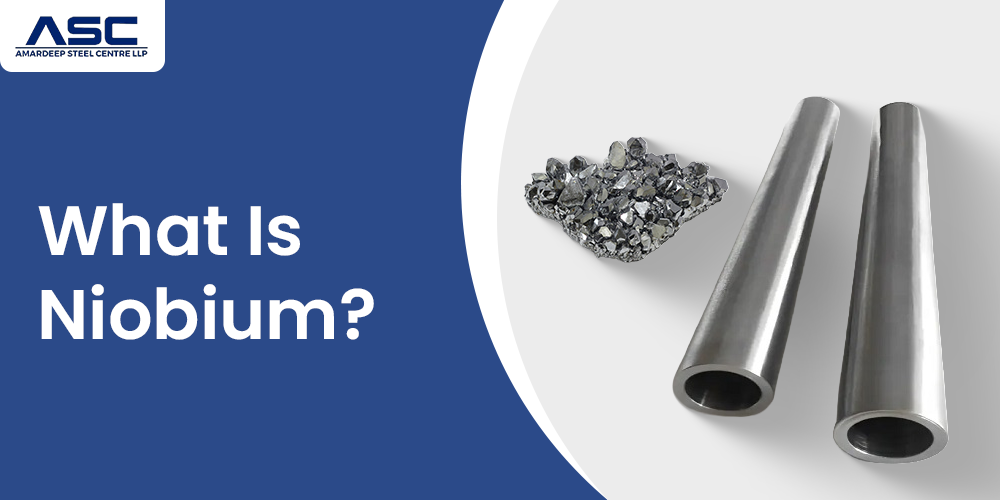
Niobium (Nb) is a glittering, grey transition metal that has taken a back stage in the history of present day engineering. Previously named Columbium, this refractory metal was first discovered in the year 1801, and is now essential in all our automobiles and the rockets that are voyaging through our solar system. Be it an engineer who needs high-performance materials or a researcher who needs the niobium price on some new project, this guide comes with the necessary properties and real-life applications of this multi-purpose element. Brief Overview Niobium (Atomic Number 41) is a transition metal that is considered to have a high melting point, corrosion resistance, and superconductivity. It is mostly used in High-Strength Low-Alloy (HSLA) steel and aerospace superalloys.
The Physical and Chemical Properties of Niobium
|
Property |
Value (Metric / Imperial) |
Industrial Significance |
|---|---|---|
|
Atomic Number |
41 |
Defines its place as a transition metal in Group 5. |
|
Atomic Weight |
92.906 u |
Essential for calculating precise alloy compositions. |
|
Melting Point |
2,477°C (4,491°F) |
Classifies it as a refractory metal; ideal for rocket nozzles and furnaces. |
|
Boiling Point |
4,744°C (8,571°F) |
Stability at extreme thermal loads. |
|
Density |
8.57 g/cm³ |
Significantly lighter than Tantalum, making it the "go-to" for aerospace weight-saving. |
|
Mohs Hardness |
6.0 |
Hard enough for durability, but ductile enough to be cold-worked. |
|
Elastic Modulus |
105 GPa |
Provides excellent structural stiffness in high-stress environments. |
|
Thermal Conductivity |
53.7 W/(m·K) |
Efficient heat transfer for chemical heat exchangers. |
|
Electrical Resistivity |
15.2 µΩ·cm (at 20°C) |
Becomes a superconductor below 9.25 K ($T_c$). |
|
Corrosion Resistance |
Excellent |
Forms a passive $Nb_2O_5$ layer; resists most organic and mineral acids. |
Applications of Niobium Metals
The reason Niobium is a multibillion-dollar industry is its ability to "upgrade" other materials.
1. High-Strength Low-Alloy (HSLA) Steel
Over 90% of the world's niobium is used in steel. Adding just 0.05% niobium significantly increases the strength and toughness of steel. This is why it's the standard for:
- Oil & Gas Pipelines: Allowing pipes to handle higher pressure.
- Automotive Frames: Creating "lighter but stronger" cars that improve fuel efficiency and crash safety.
2. Aerospace & Superalloys
In the extreme heat of a jet engine or rocket nozzle, standard metals would fail. Niobium alloys (like C-103) maintain their structural integrity at temperatures exceeding 1,200°C.
3. Superconducting Magnets (MRI Machines)
Niobium-titanium (NbTi) and Niobium-tin (Nb3Sn) are the core materials used to build the magnets inside MRI scanners and particle accelerators. Without niobium, modern medical imaging wouldn't exist as we know it.
4. Specialized Lab & Chemical Equipment
Because it doesn't react with aggressive chemicals, niobium tubes and niobium pipes are preferred for heat exchangers and chemical processing equipment handling corrosive acids.
Niobium vs. Tantalum: What's the Difference?
|
Feature |
Niobium (Nb) |
Tantalum (Ta) |
The Winner for Your Project? |
|---|---|---|---|
|
Density (Weight) |
8.57 g/cm³ |
16.65 g/cm³ |
Niobium is nearly 50% lighter—essential for aerospace and satellites. |
|
Melting Point |
2,477°C |
3,017°C |
Tantalum handles higher heat without losing structural integrity. |
|
Corrosion Resistance |
Excellent (up to 100°C) |
Superior (up to 150°C+) |
Tantalum is the "gold standard" for the most aggressive acid environments. |
|
Superconductivity |
High ($T_c$ = 9.25 K) |
Lower ($T_c$ = 4.47 K) |
Niobium is the primary choice for MRI magnets and particle accelerators. |
|
Capacitance |
Good |
Excellent |
Tantalum allows for much smaller, high-stability electronic capacitors. |
|
Biocompatibility |
High (Hypoallergenic) |
High (Inert) |
Both are great; Niobium is often used in jewelry for its color-changing ability. |
|
Typical Cost |
Lower / More Stable |
Higher / More Volatile |
Niobium is generally the more cost-effective choice for large-scale projects. |
Benefits of Niobium
Niobium is often described as a "performance multiplier" because it dramatically improves the properties of the materials it is added to. Here are the core niobium metal benefits:
Exceptional Heat Resistance
Niobium doesn't start to melt until it hits 2,477°C. This extreme thermal stability allows parts to operate in high-temperature environments where other metals would soften or fail entirely.
Superior Corrosion Protection
Niobium naturally forms a protective oxide layer on its surface. This "shield" protects it from aggressive chemicals and acids, making it highly reliable for long-term use in marine and chemical processing environments.
Lightweight and Strong
One of the biggest niobium metal benefits is its high strength-to-weight ratio. Adding just a tiny amount of niobium to steel allows engineers to build thinner, lighter, and stronger structures without sacrificing safety.
Common Niobium Alloys
To achieve specific engineering goals, the metal is often combined with others to create specialized niobium alloys. Understanding these types is essential for selecting the right material for your industry.
- Nb-Ti (Niobium-Titanium): Combines niobium's strength with titanium's ductility. It is the "workhorse" of the medical community, used for superconducting MRI magnets.
- Nb-Zr (Niobium-Zirconium): Offers improved high-temperature strength and creep resistance. It is commonly used in nuclear reactor core components.
- Nb-Hf (Niobium-Hafnium): Found in the famous C-103 alloy, it is suited for extreme environments like rocket engine nozzles and spacecraft thermal protection.
- Ta-Nb (Tantalum-Niobium): Merges tantalum's corrosion resistance with niobium's lightweight strength. This is a favorite for surgical implants and chemical processing.
What Affects the Niobium Price?
The niobium price is primarily driven by its highly concentrated supply chain and its essential role in the steel industry. Over 90% of global production originates from just a few mines in Brazil and Canada, making prices sensitive to geopolitical stability and trade policies. Demand is dominated by High-Strength Low-Alloy (HSLA) steel production; however, as we move through 2026, the market is seeing increased pressure from the aerospace and electric vehicle battery sectors. Additional cost factors include purity levels (up to 99.999%), the complexity of fabrication into foils or tubes, and global energy costs for refining.
Looking for Niobium Products?
We supply a full range of high-purity Niobium products tailored for industrial and research needs:
- Niobium Foil: Ultra-thin for electronics and research.
- Niobium Sheet: For stamping, drawing, and high-temp shields.
- Niobium Tube & Pipe: Ideal for corrosion-resistant heat exchangers.
- Niobium Wire: Used in superconducting and medical applications.
Frequently Asked Questions (FAQ)
Is Niobium safe for jewelry?
Yes. Niobium is hypoallergenic and can be "anodized" to create a rainbow of colors, making it popular for medical-grade body jewelry.
What is the main ore of Niobium?
Most niobium is extracted from the mineral pyrochlore.
Does Niobium rust?
No. It forms a protective oxide layer that prevents rusting, even in many acidic environments.