How to Calculate Chequered Plate Weight: The Ultimate Guide
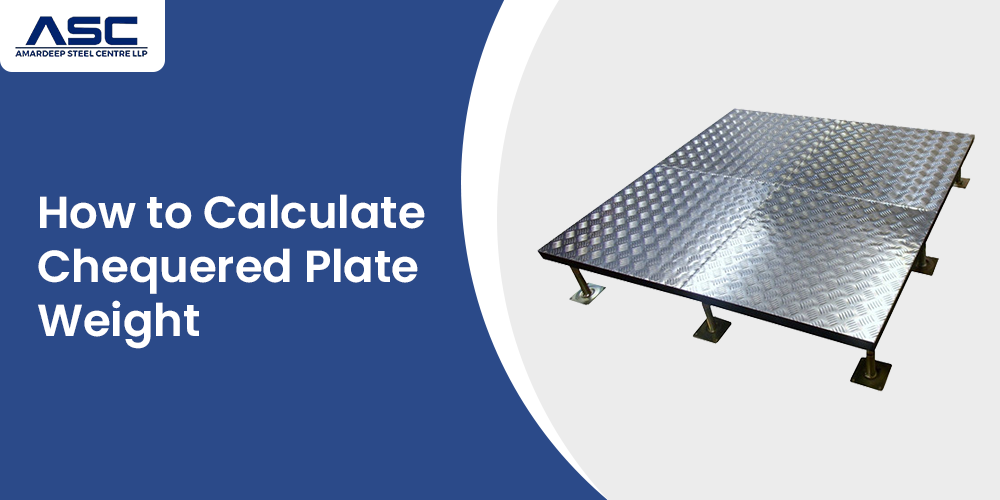
Mathematical precision is important in high stakes industrial environments, like offshore oil platforms and pharmaceutical clean rooms. The standard surface used in industries as a slip-resistant surface is the chequered plate (or diamond plate, or tread plate). Since the calculation of chequered steel plates is based on mass, a mistake in the weight of chequered plates can cost the budget a lot or cause setbacks in the logistics. We also feel that consistency in partnerships is achieved through transparency at Amardeep Steel Centre. This guide contains the precise formulae, density constants and a plate of Chequered MS chart of a plate size to ensure that you can ascertain the weight of Mild Steel, Stainless steel and Aluminum plates with a hundred percent assurance.
What Is a Chequered Plate?
A chequered plate is a plain sheet of metal, prepared by drawing on one side a regular raised design in the style of diamonds, teardropes or 5-bar. Such protrusions provide mechanical grips that are required in places that might be holding moisture, oils, or grease.
Typical Applications:
- Industrial Walkways and Mezzanines: These are necessary to ensure that there is a safe passage in the factories.
- Marine Engineering: Applied on ship decks and docks as it is high traction.
- Transport & Logistics: Flooring of ambulances, trucks, and buses.
- Chemical & Pharma: The use of Stainless Steel 316L plates as hygienic and non-slip surfaces.
The Master Formula for Weight Calculation
The weight of a chequered steel plate is higher than a plain sheet of the same thickness due to the added metal in the raised pattern.
1. The Mathematical Formula
For an accurate chequered plate weight calculator result, use:
$$Weight (kg) = [Length (m) \times Width (m) \times Thickness (mm) \times Density] + Pattern Factor$$
2. Standard Density Values ($kg/m^3$)
The density variable changes based on the material grade:
- Mild Steel (MS): 7.85
- Stainless Steel (SS 304/316): 8.00
- Aluminum: 2.70
3. The "Pattern Factor"
Raised diamonds typically add 2.0 kg to 4.0 kg per square meter to the base weight. We recommend a 10% allowance for the pattern when using a basic manual chequered plate weight calculator method.
MS Chequered Plate Size Chart (kg/m²)
Use this MS Chequered Plate Size chart for quick reference during procurement. It includes standard teardrop pattern weights for Mild Steel.
|
Chequered Plate Thickness |
Weight per Sq. Meter (kg/m²) |
Weight (1250 x 2500 mm Sheet) |
Weight (1500 x 6000 mm Sheet) |
|---|---|---|---|
|
3.0 mm |
26.55 kg |
82.97 kg |
238.95 kg |
|
4.0 mm |
34.40 kg |
107.50 kg |
309.60 kg |
|
5.0 mm |
42.25 kg |
132.03 kg |
380.25 kg |
|
6.0 mm |
50.10 kg |
156.56 kg |
450.90 kg |
|
8.0 mm |
65.80 kg |
205.62 kg |
592.20 kg |
|
10.0 mm |
83.40 kg |
260.62 kg |
750.60 kg |
|
12.0 mm |
100.60 kg |
314.37 kg |
905.40 kg |
Selection Guide: Chequered Plate Thickness by Application
Choosing the right chequered plate thickness is a balance between load capacity and chequered plate price.
- Light Duty (2.5mm - 3mm): Decorative panels, interior vehicle flooring, and partitions.
- Medium Duty (4mm - 6mm): Standard industrial flooring, stair treads, and platforms.
- Heavy Duty (8mm - 12mm+): Heavy-traffic loading docks, trench covers, and offshore platforms.
Frequently Asked Questions (FAQs)
How do I calculate the weight for Stainless Steel (SS) plates?
Use the same formula but replace the density of 7.85 with 8.00 for Grade 304 or 8.02 for Grade 316L.
Does the chequered plate thickness affect the final price?
Yes, chequered plate price is often determined by the total chequered plate weight, which increases significantly with thickness.
Are these weights exact?
These are theoretical weights. Actual weights may vary slightly based on manufacturer rolling tolerances and pattern height.
Can I get custom-cut sizes?
Yes. At Amardeep Steel Centre, we offer high-precision shearing and plasma cutting services for any project requirements.
Conclusion
Understanding how to calculate chequered plate weight is essential for accurate quoting, safe structural design, and efficient logistics. By utilizing the density of your specific material and accounting for the pattern factor, you can ensure your project remains financially on track.
With over three decades of expertise, Amardeep Steel Centre is a global leader in supplying high-performance MS plate products, stainless steel plate solutions, and weight chart calculator tools. Whether you require standard chequered steel plates or specialized Inconel sheets, we provide fully certified materials tailored to your needs.
Would you like me to generate a specific technical datasheet for a custom chequered plate thickness or grade?