Stainless Steel Used in the Food Service Industry
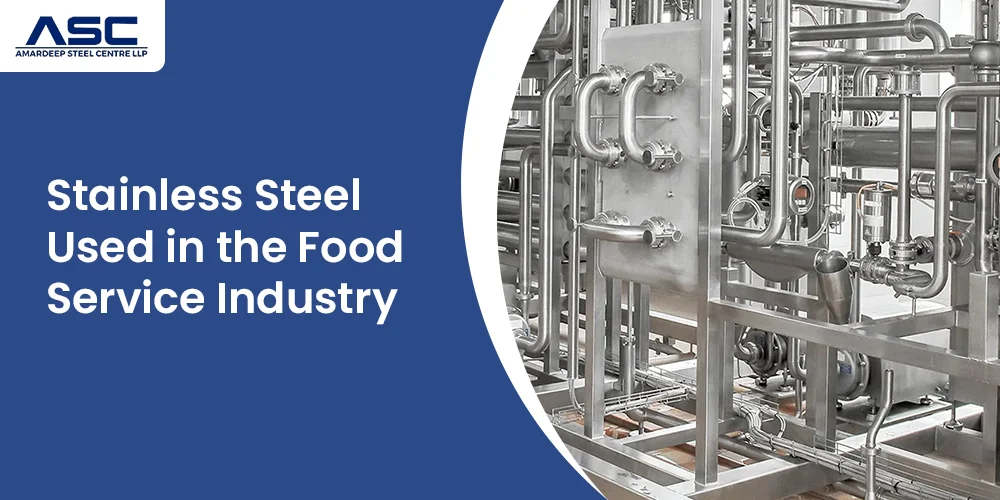
Walk into almost any commercial kitchen, dairy plant, brewery, or food processing facility and the material lining the counters, tanks, and pipework is the same: stainless steel. It has become the default choice for the food service industry because it checks nearly every box the sector cares about, hygiene, durability, and resistance to the acids, salts, and moisture that food work involves every day.
On this page
Why the Food Industry Relies on Stainless Steel
Food contact surfaces need to survive constant washing, exposure to acidic or salty ingredients, and repeated temperature swings without breaking down or contaminating what passes over them. Stainless steel meets all of these demands at once, which is why it dominates the sector rather than materials like plain carbon steel, wood, or plastic.
- Non-reactive surface that will not alter the taste, smell, or safety of food
- Smooth, non-porous finish that resists bacterial growth and is easy to sanitize
- Strong resistance to rust, staining, and pitting from acids, brine, and moisture
- Durable enough to handle daily washing, high heat, and heavy equipment loads for years
- Recyclable and long lasting, which keeps lifecycle costs down despite a higher upfront price
Common Food Grade Stainless Steel Types
Not every stainless steel grade is used the same way in food environments. Two grades cover most of the sector's needs.
Grade 304
Grade 304 is the workhorse of the food service industry. It offers strong corrosion resistance, good formability, and a bright finish, which makes it the standard choice for sinks, worktables, mixing bowls, cookware, and general kitchen equipment. See our stainless steel 304 plates, sheets, and coils for available specifications.
Grade 316
Grade 316 adds molybdenum to the mix, which improves resistance to chlorides and acids. It is the preferred option in seafood processing, coastal facilities, breweries, and pharmaceutical grade food production where equipment faces heavier exposure to salt or acidic cleaning agents. Our stainless steel 316 plates, sheets, and coils cover this grade in the thicknesses commonly used for food processing tanks and worktops. For help choosing between the two, see our comparison of 304 vs 316 stainless steel.
Sanitary Tubing and Piping
Liquid transfer in food and beverage production, milk, juice, beer, and syrups among them, relies on sanitary austenitic stainless steel tubing. Unlike standard pipe, sanitary tubing is built with a smoother interior finish, tight dimensional tolerances, and crevice-free welded joints so that residue cannot collect and harbor bacteria along the flow path. This is a key reason processors specify sanitary grade tubing rather than standard stainless steel pipes and tubes for anything touching the product stream.
Typical Equipment and Applications
- Commercial kitchen equipment: worktables, sinks, shelving, ovens, and range hoods
- Food processing plants: mixing tanks, conveyors, and sanitary pipework
- Dairy and beverage production: storage tanks, sanitary tubing, and stainless steel instrumentation tubing used in process control and heat exchangers
- Cutlery, cookware, and serving equipment used in restaurants and catering
- Refrigeration and cold storage fittings that need to resist condensation and cleaning chemicals
Hygiene and Regulatory Considerations
Food safety regulations in most markets call for surfaces that are smooth, cleanable, and resistant to corrosion, criteria that stainless steel satisfies without additional coatings or treatments. Its consistent performance under repeated sanitizing cycles is a major reason inspectors and equipment manufacturers continue to specify it as the default material for anything that touches food directly.
Caring for Stainless Steel Food Equipment
- Clean with mild, non-chlorinated detergents rather than harsh or abrasive chemicals
- Avoid steel wool or abrasive pads that can scratch the surface and create spots for bacteria to collect
- Dry equipment after washing to prevent water spotting and mineral buildup
- Wipe down surfaces along the grain of the finish rather than across it
Sourcing the right grade and form, whether that is sheet, plate, tubing, or fittings, makes a real difference to how equipment performs over time. Our team at Amardeep Steel Centre supplies food grade stainless steel products, including plates, sheets, coils, pipes, and sanitary tubing, and can help you match the right grade to your process and hygiene requirements. Enquire now to speak with our sales team.
Frequently Asked Questions
Why is stainless steel preferred in the food service industry?
Stainless steel resists rust and staining, does not react with acidic or salty foods, and has a smooth, non-porous surface that is easy to clean and sanitize, which makes it a natural fit for kitchens and food processing plants.
What grade of stainless steel is used for food equipment?
Grade 304 is the most common choice for general food equipment such as sinks, worktables, and cookware, while grade 316 is preferred where extra resistance to salt, acid, or chloride exposure is needed, such as in seafood processing or coastal facilities.
Is stainless steel food grade safe for direct food contact?
Yes. Food grade stainless steel such as 304 and 316 is non-toxic, does not leach into food, and does not harbor bacteria the way porous materials can, which is why it meets hygiene standards used across the food service industry.
How is sanitary stainless steel tubing different from standard tubing?
Sanitary stainless steel tubing has a smoother interior finish, tighter dimensional tolerances, and crevice-free welded joints so that liquids and food products can flow through without trapping residue or bacteria.
How do you maintain stainless steel food equipment?
Regular cleaning with mild, non-chlorinated detergents, avoiding abrasive scrubbing that scratches the surface, and drying equipment after washing all help preserve the protective oxide layer and keep the surface corrosion resistant.
Stainless Steel Metal Fabrication — Processes, Grades, Welding & Surface Finishing Guide
Stainless Steel Metal Fabrication is a very specialised process and is very different from carbon steel, as it has a very different metallurgical behaviour.