What Are Finned Tubes? Uses, Types & Industrial Applications
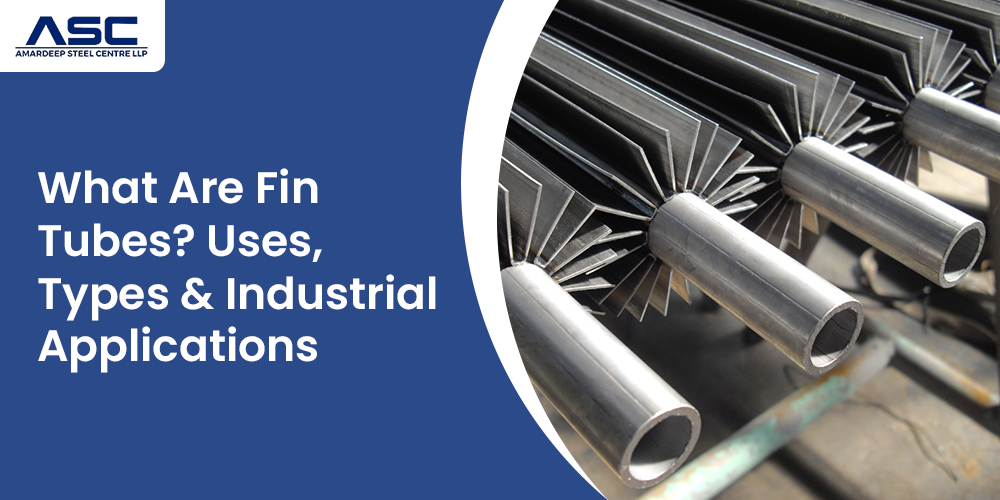
In thermal process engineering, the heat transfer equipment is of utmost importance. It is true, whether you are designing an air-cooled heat exchanger, an HVAC coil, or a condenser, that the geometry of your tube surface is the direct factor in determining the thermal performance of your system. This blog contains all the information you need to know about finned tubes: what they are and how they are built, the materials and technology to make them work, the most important types of finned tubes and how they are used, what critical design considerations must be in the specification fin tubes for heat exchangers and most importantly, which industries are enjoying the best operational and economic benefits with finned tube technology.
What Are Fin Tubes?
Finned tubes are heat transfer tubes that have external surface extensions commonly referred to as fins that make the outer surface of the tube by far a great deal larger but which do not change the flow bore. Depending on the process duty, the base tube may be made of carbon steel, alloy steel, stainless steel, copper or some specialised alloys. Fins are either made of aluminium due to its thermal conductivity and low weight, or copper and alloy are used where the mechanical strength or corrosion resistance is required.
Materials, Construction, and Why They Matter
The performance, service life, and reliability of finned tube heat exchangers are directly tied to material selection and manufacturing quality. The major material and construction factors, which should be considered by engineers during the design phase, are as follows.
- Base Tube Materials: Construction Fin tube fin tube construction commonly uses carbon steel, stainless steel, copper, and specialised alloys that have been chosen due to either corrosion resistance or high-temperature service. There is no compromise on material compatibility with process fluids and operating temperatures.
- Fin Material: Aluminium is most widely used in making of fins because it is highly thermal conductive and economical in weight. Copper fins are chosen to be used in situations that demand high conductivity or corrosion resistance in a particular chemical environment. The aggressive or high-temperature services utilize special alloy fins.
- Fin Attachment Methods: The most common way of attaching a fin is through brazing which gives permanent joints that are thermally efficient. Applications that are prone to metallurgical or temperature constraints of brazed joints include welded fins, mechanically tensioned fins and extruded integral fins.
Types of Finned Tubes and Fin Configurations
Knowledge of finned tubes is crucial towards the specification of the right solution to a particular thermal duty. The right configuration of fin tubes for heat exchangers determines heat transfer efficiency, airside pressure drop, mechanical robustness, and overall installed cost.
- Spiral Finned Tubes: A helical twisting continuous strip of fin is wound round the underlying tube in the form of spiral finned tubes. It is a good design when external flow is in turbulent flow and at high speeds. The helical geometry offers evenly distributed fins and is not vulnerable to mechanical stress due to vibration - hence it is a desirable choice in forced-draft or induced-draft air-cooled heat exchanger.
- Plate Finned Tubes (Low Fin Tubes): Plate fins are mounted in the form of flat plates at right angles to the tube axis. The design provides the maximum possible external surface area per unit tube length and is used in small fin tube heat exchangers where there is a high need to use surface density as space is limited.
- Extruded Finned Tubes: In extruded finned tubes the fin is cut off as a part of the outer skin of a bimetal tube - normally an aluminium covering on a steel or alloy core. The outcome is a metallurgically bonded assembly of tube-fin and that has minimum resistance to contact, high thermal conductivity and mechanical strength. Extruded fins remove the danger of degradation of fin-to-tube joints with thermal cycles.
- Embedded ('G' Type) Finned Tubes: In embedded finned tube G-type or embedded, the fin base is embedded by a helical groove cut on the outer surface of the tubes. This guarantees good mechanical contact between fin and tube, and it would be applicable in the high-temperature services where thermal cycling is likely to otherwise cause degradation of fins secured by tension or brazing itself.
- 'L' / 'LL' / 'KLM' Type Finned Tubes: The type of finned tubes have got L-shaped foot tensioned into the tube surface. The types of LL and KLM offer a common foot protection of the tube and extra mechanical interlock, respectively. The variants are common in moderate temperature service and offer satisfactory corrosion protection at the tube-fin joint.
- Welded Finned Tubes: Resistance welding is done on the fin strip to the tube outer surface to form welded fin tubes. This design is ideal in high temperature work and services dealing with aggressive external fluids in which full metallurgical bonding of a joint is necessary. They are used in waste heat recovery, fired heaters and boilers.
- Studded Finned Tubes: Rather than continuous fins, studded finned tubes have projections in the form of studs welded to the tube surface. These are used in high temperature, high fouling services, especially fired heaters, cracking furnaces, and boilers, in which continuous fins would be heavily loaded.
Finned Tubes Uses and its Industrial Applications
The span of finned tubes uses is one, which cuts across the board of process industry and power generation. The main industrial uses of the fin tube heat exchanger in providing important performance include the following.
- Power Generation: Air-cooled condensers are also applied in thermal power plants in order to use waste heat on exhaust steam, which is exchanged with ambient air using finned tubes, allowing water to be recovered or heat to be rejected in areas with limited water supply. Covered in the economisers, air preheaters, and heat recovery steam generators (HRSGs), finned tube bundles are also part of them.
- Oil Refining and Petrochemicals: The petrochemical and refinery processes require small scale cooling and heating of the hydrocarbons, crude fractions, process gases, and steam. Big cooling water systems are eliminated and the risk of operational problems is minimized by utilizing air-cooled heat exchangers with finned tube bundles.
- Chemical and Process Industries: Fin tube heat exchangers are used in chemical production, in gas coolers, condensers, evaporators, and reboilers where extreme control of temperature is required. Their small size minimizes the amount of land and the amount of capital outlay.
- HVAC - Mega Commercial and Industrial: Massive HVAC makes use of finned tube coils to heat, cool and dehumidify air-handling units. Finned coils are used to allow the high surface to volume ratio that allows effective heat exchange in small ducting setups.
- Refrigeration and Chillers in the Industries: Industrial refrigerating systems utilize finned tube evaporator and condenser coils in which refrigerant circulates at the core whereas air passes over the fins. This design has the highest heat transfer efficiency in the refrigeration cycle.
- Fired Heaters and Waste Heat Recovery: Finned tubes are studded and welded where long surfaces are required to resist radiant heat, flue gas temperatures and forceful fouling by combustion products in fired heaters, cracking furnaces and waste heat recovery units.
Fin Tubes for Heat Exchangers: Design Considerations
When selecting fin tubes for heat exchangers, several design factors must be considered:
- Operating temperature and pressure
- Corrosion resistance requirements
- Fin height and pitch
- Air-side heat transfer coefficient
- Maintenance and cleaning accessibility
The correct selection ensures optimal heat transfer performance while minimizing pressure drop and operational costs.
How to Select the Right Finned Tubes for Your Application
It takes a systematic approach of application engineering to get the fin tube specification right. The checklist used in this paper is as follows:
- Specify Internal Fluid and External Fluid Characteristics: Temperature limits, rates, pressures, viscosity, fouling propensity, and chemical compatibility of each of the tube-side fluid and the shell / air-side fluid.
- Choose Fin Type Depending on Flow Regime: The choice of spiral finned tubes is made in preference in high air velocity and turbulent external flow. Small exchangers that have space limitations require plate-finned or extruded designs. Studded or welded fin tubes may be needed in high temperature and high fouling services.
- Select Materials to Ensure Compatibility and Durability: Select thermal performance, corrosion resistance and compatibility process materials in tubes and fins. Identify where coatings are required due to either a corrosive or a marine environment.
- Minimise Fin Density Versus Permitted Pressure Drop: Simulation or empirical correlations of process simulation are used to optimise the fin pitch to maximise heat transfer without violating the allowable pressure drop across the airside and fan power constraint.
- Take into Consideration Maintenance and Operational Access: Select fin spacing and tube layout that allow inspection and cleaning and replacement of tubes during the planned service life.
- Assess Lifecycle Cost: Divide energy savings due to efficient heat transfer, frequency of maintenance, future tube life, and replacement frequency into initial procurement cost.
Amardeep Steel: Your Trusted Supplier of High-Quality Finned Tubes
Amardeep Steel is a reliable producer and distributor of fin tubes of high quality construction in terms of dimensional and metallurgical requirements. We also provide the complete assortment of finned tube types - spiral, extruded, embedded, welded, L-type, studded, in carbon steel, alloy steel, stainless steel and other specified materials.
Our technical staff also collaborates closely with the procurement engineers, process engineers and project managers to suggest the appropriate fin tube specification to your thermal load, material requirement and budget. Amardeep Steel provides custom-made fin tubes to heat exchangers in power plants as well as exchangers demanded in petrochemical plants that are of international standard.
Ready to specify finned tubes for your next project?
Contact Amardeep Steel today to request a quote or discuss your technical requirements with our engineering team.